I’ll admit it: boiling hot dogs in beer sounded like one of those cooking tricks that could go either way.
Best-case scenario? Juicy hot dogs with a little extra malty flavor.
Worst-case scenario? Dinner tastes like somebody dropped a hot dog into a warm beer at a tailgate.
Still, I had to think about it.
Hot dogs already pair naturally with beer at cookouts, baseball games, backyard parties, and summer get-togethers. So why not put the beer directly into the cooking pot?
That’s the idea behind beer boiled hot dogs.
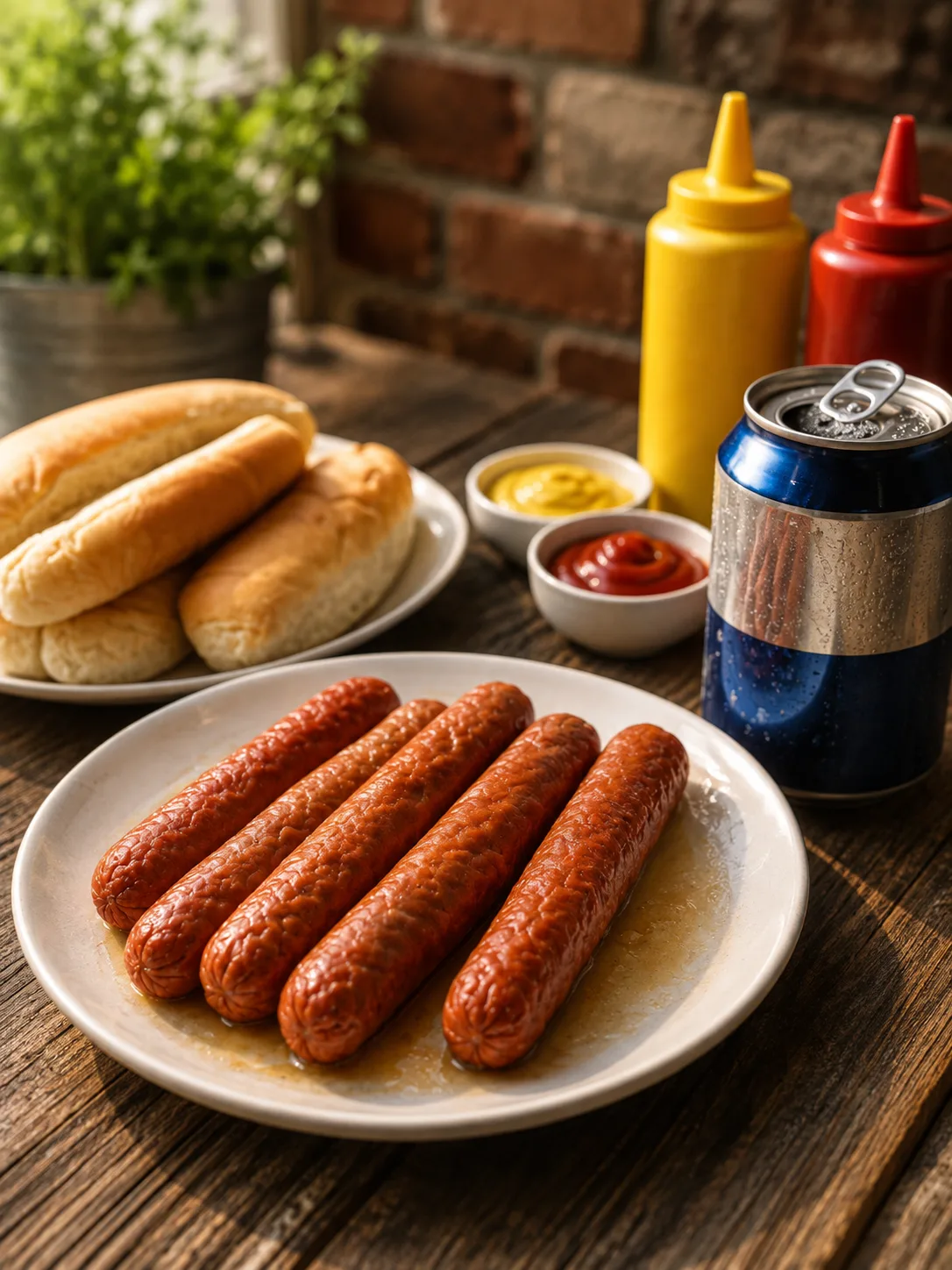
Instead of simmering hot dogs in plain tap water, you cook them in an inexpensive lager. After about 15 minutes, the hot dogs are heated through and pick up some flavor from the beer.
But there’s a catch.
The type of beer matters. The cooking temperature matters. And I wouldn’t aggressively boil hot dogs for 15 straight minutes.
Here’s how I’d make them, what changes when beer replaces water, and the little finishing step that makes these hot dogs considerably better.
What Are Beer Boiled Hot Dogs?
Beer boiled hot dogs are exactly what they sound like.
Hot dogs are heated in beer instead of plain water.
An inexpensive lager works particularly well because its flavor is generally mild enough to complement the meat without completely taking over.
As the hot dogs heat, the beer adds subtle malt and grain notes.
You can also add onions, garlic, butter, or spices to the pot.
The result is a familiar hot dog with a little more personality.
And no, it doesn’t need to become some fancy chef situation.
We’re still making hot dogs.
That’s part of the charm.
Easy Beer Boiled Hot Dogs Recipe
Prep Time: 5 minutes
Cook Time: About 10–15 minutes
Total Time: About 20 minutes
Servings: 6–8
Ingredients
- 6 to 8 fully cooked hot dogs
- 2 cans or bottles mild lager, about 24 ounces total
- 1 medium yellow onion, sliced
- 1 tablespoon butter, optional
- 1/2 teaspoon garlic powder, optional
- 1/4 teaspoon black pepper
- 6 to 8 hot dog buns
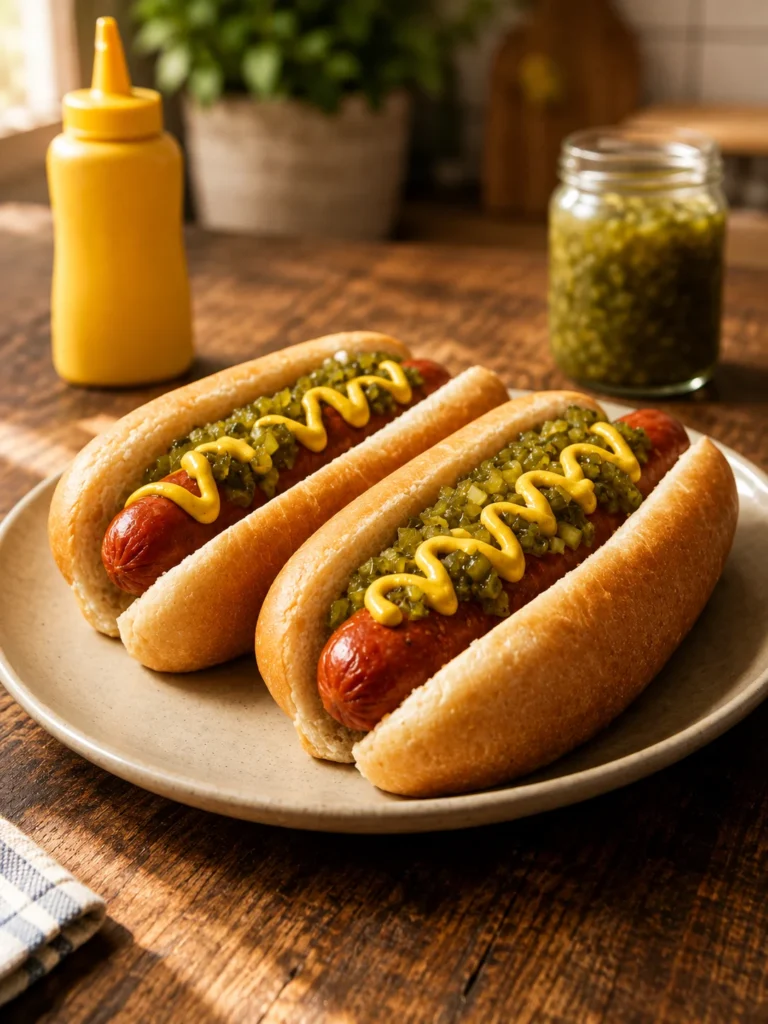
- Mustard, ketchup, relish, sauerkraut, onions, or other favorite toppings
For an extra finish, keep a skillet or grill ready for a quick browning step after the hot dogs come out of the beer.
Step 1: Choose a Mild Lager
This isn’t the moment to reach for the strongest beer hiding in the refrigerator.
A basic lager is a good starting point because it tends to have a relatively mild flavor.
Remember, you’re concentrating some of that flavor with heat.
A strongly bitter beer can leave the hot dogs with a bitterness you may not want.
For your first batch, keep things simple.
Cheap lager?
Totally fine.
Actually, that’s kind of the point.
Save the fancy stuff for the glass.
Step 2: Slice an Onion
Slice one medium yellow onion into thin strips.
This step isn’t mandatory, but I think onions make the whole idea work better.
As the onions cook in the beer, they soften and add their own savory-sweet flavor to the liquid.
Even better, you can use those onions as a topping afterward.
One ingredient doing two jobs?
That’s weeknight cooking I can get behind.
Step 3: Add the Beer to a Saucepan
Pour approximately 24 ounces of lager into a medium saucepan or pot.
Use enough liquid so the hot dogs can sit comfortably in it.
You don’t necessarily need a giant stockpot filled with beer.
That’s wasteful, and frankly, your hot dogs aren’t demanding bottle service.
Add the sliced onion, black pepper, and garlic powder if using.
Then bring the mixture toward a gentle simmer.
Step 4: Don’t Let the Beer Boil Aggressively
Here’s an important difference between “beer boiled hot dogs” and how I actually prefer to cook them.
Don’t hammer them with a rolling boil.
A gentle simmer is enough.
High heat can cause hot dog casings to split, especially if they’re left in the pot for too long.
Once the beer reaches a gentle simmer, lower the heat.
You want steady heat with small bubbles.
Not a bubbling volcano of lager and sausage.
Step 5: Add the Hot Dogs
Carefully place the hot dogs into the simmering beer.
Keep them mostly submerged.
If necessary, add a little water rather than opening another entire beer just to gain half an inch of liquid.
Let the hot dogs heat gently.
Since most packaged hot dogs are already fully cooked, you’re generally reheating them rather than cooking raw meat from scratch.
Still, check the package because products vary.
Step 6: Simmer Until Heated Through
Let the hot dogs simmer gently for around 8 to 10 minutes.
For a larger batch or very cold hot dogs straight from the refrigerator, you may need a little longer.
Fifteen minutes can work at very gentle heat, but I wouldn’t automatically assume longer is better.
Overheating can affect texture and may cause splitting.
The package directions should always take priority for the specific product you’re using.
And if you’re wondering whether staring intensely at the pot makes hot dogs cook faster…
I’ve tested that technique extensively.
Results remain inconclusive.
What Happens After 15 Minutes?
The most noticeable difference isn’t some huge transformation.
Your hot dog doesn’t suddenly taste like a pint of lager.
Instead, the change is subtler.
The hot dogs are hot and juicy, while the outside can pick up some of the beer’s malty character.
The onions become soft and flavorful.
The cooking liquid smells distinctly savory and beer-forward.
If you used a mild lager, the finished flavor should remain familiar.
That’s important.
A hot dog should still taste like a hot dog.
We’re adding another layer, not giving it an identity crisis.
Beer Boiled Hot Dogs vs. Water Boiled Hot Dogs
Plain water does one job very well.
It heats the hot dog.
But it doesn’t contribute much flavor.
Beer adds malt, grain, and sometimes mild hop notes.
Add onions to that beer and you create a much more flavorful cooking liquid.
However, don’t expect the difference to be as dramatic as marinating a steak overnight.
Hot dogs have their own strong seasoning.
The beer flavor generally sits behind it.
For me, the bigger benefit comes from combining beer, onions, and a final browning step.
That’s when things get really good.
The Best Trick: Brown Them After the Beer Bath
This is the step I wouldn’t skip.
Once the hot dogs are heated through, remove them from the beer.
Pat the surface carefully if necessary.
Then place them briefly in a hot skillet or on a grill.
Give them just enough time to develop browned spots.
Now you’ve got two things happening.
The beer simmer heats the center and adds flavor.
The skillet or grill gives the exterior that browned, slightly crisp character you don’t get from simmering alone.
Honestly, if I had to pick between straight beer-boiled hot dogs and beer-simmered-then-grilled hot dogs?
I’m choosing the second version every time.
How to Finish Them in a Skillet
Heat a skillet over medium-high heat.
Add a small amount of butter or cooking oil if needed.
Place the drained hot dogs into the hot skillet.
Turn them periodically until the exterior develops some color.
This should only take a few minutes.
Don’t wander off.
Hot dogs go from “needs another minute” to “why is the smoke alarm involved?” surprisingly fast.
Once browned, transfer them directly into warm buns.
How to Finish Them on the Grill
Beer-simmering works particularly well before grilling.
Heat the hot dogs in the beer first.
Then transfer them to a preheated grill.
Cook only long enough to develop grill marks and a browned exterior.
This method is handy for backyard parties because you can heat a batch in the pot and finish them quickly on the grill.
Just follow safe food-handling practices and don’t leave hot dogs sitting around at unsafe temperatures.
Cookout food still has rules.
Even when everybody is wearing flip-flops.
Add Butter to the Beer
Butter sounds a little unnecessary.
And maybe it is.
But unnecessary deliciousness is still deliciousness.
Add about a tablespoon of butter to the beer and onions.
It brings a little richness to the cooking liquid and softens the sharper edges of the beer flavor.
You don’t need much.
This isn’t supposed to become butter soup.
A small amount is plenty.
Make Beer and Onion Hot Dogs
If you’re already cooking onions in the beer, don’t throw them away.
Drain them once they’re tender.
Then place them directly on the hot dogs.
For even more flavor, move the softened onions to a skillet with a little butter and cook them briefly until they pick up some color.
Add mustard.
Maybe sauerkraut.
That’s a seriously good hot dog.
Messy?
Probably.
Worth grabbing three napkins?
Absolutely.
Try a Beer, Butter, and Onion Version
For an especially rich variation, combine lager with sliced onion and a tablespoon of butter.
Simmer the hot dogs gently in that mixture.
Remove them once heated.
Brown the hot dogs in a skillet.
Then cook the drained onions briefly in the same skillet.
Pile everything into toasted buns.
Add spicy brown mustard.
This version has sweetness from the onions, maltiness from the beer, richness from butter, and plenty of savory flavor from the hot dog itself.
It’s basically backyard cookout food wearing its Sunday clothes.
Add Sauerkraut
Beer, sausage, mustard, and sauerkraut are natural friends.
Drain your sauerkraut well.
Warm it separately or add a small amount to the beer mixture near the end if appropriate for your recipe.
Then spoon it over the finished hot dogs.
The tanginess helps cut through the richness.
Add mustard and you’ve got a bold, savory combination without needing twelve different toppings.
Sometimes simple really does win.
Add Spicy Brown Mustard
Regular yellow mustard works.
I will never disrespect classic yellow mustard on a hot dog.
But spicy brown mustard is especially good with beer-cooked hot dogs.
Its sharper flavor stands up to the maltiness of the lager and richness of the meat.
Dijon can also work if that’s what you have.
For something sweeter, try a small amount of honey mustard.
Just remember that hot dog toppings can get chaotic quickly.
At some point you’re no longer eating a hot dog.
You’re carrying a salad on a bun.
Try Pickled Jalapeños
Want heat?
Add pickled jalapeño slices after cooking.
Their acidity and spice work nicely against a rich hot dog.
You can pair them with mustard, chopped onion, or even a little cheese.
I wouldn’t add a huge amount of jalapeño brine directly to the beer pot, though.
Keep the cooking liquid relatively simple.
Then let everyone build their own hot dog.
That’s especially useful at parties because one person’s “nice little kick” is another person’s emergency glass of milk.
Make Chili Cheese Beer Hot Dogs
Things can get gloriously messy from here.
Cook the hot dogs in lager.
Brown them afterward.
Place them into toasted buns.
Add hot chili.
Top with shredded cheese.
Finish with chopped onions and mustard.
Does the subtle beer flavor become harder to identify under chili and cheese?
Sure.
Do I care?
Not particularly.
This variation is less about appreciating delicate lager notes and more about requiring a fork before you’re finished.
Toast the Buns
Please toast the buns.
Okay, you don’t have to.
But it makes a difference.
Brush the inside lightly with butter if desired.
Place the buns cut-side down in a skillet or briefly on the grill.
Toast until lightly golden.
That warm, slightly crisp interior handles juicy toppings much better than a cold, soft bun straight from the package.
It also makes an ordinary hot dog feel like you put in considerably more effort.
Little kitchen trick.
Big payoff.
What Beer Works Best for Boiling Hot Dogs?
For this recipe, I prefer mild beer.
A basic American-style lager works well because it contributes flavor without overwhelming the hot dogs.
Pilsner can also work, although bitterness varies.
A light lager may produce an even milder result.
The key is choosing something you don’t mind tasting.
Cooking doesn’t magically remove flavors you dislike.
If you hate the beer when it’s in a glass, there’s a decent chance you won’t suddenly adore it when it’s wrapped around a hot dog.
Be Careful With Very Hoppy Beer
An IPA may sound tempting if you love hoppy beer.
But heating and reducing strongly hopped beer can make bitterness much more noticeable.
That doesn’t automatically mean the result will be bad.
Some people enjoy that character.
But if you’re serving a crowd, mild lager is the safer choice.
Hot dogs already contain plenty of strong salty and smoky flavors.
They don’t necessarily need a wrestling match with aggressive hops.
What About Dark Beer?
Dark beer can give hot dogs a deeper malt flavor.
Depending on the beer, you may notice toasted, caramel-like, or roasted notes.
That can work particularly well with onions and mustard.
However, the finished result will taste different from a light lager version.
If you’re experimenting for the first time, I’d start with lager.
Then get fancy later.
Hot dog science requires patience.
Can You Use Nonalcoholic Beer?
Yes, nonalcoholic beer can be an option if you want beer-like malt flavor without using standard lager.
The exact taste will depend on the product.
Use it the same basic way: bring it to a gentle simmer with onions and seasonings, then heat the hot dogs according to their package directions.
This can be especially useful when cooking for a household where standard beer isn’t wanted.
Does Cooking Remove All the Alcohol?
No.
This is an important point.
Cooking with beer does not guarantee that all alcohol disappears.
Alcohol reduction depends on several factors, including cooking time, cooking method, temperature, surface area, and how the food is prepared.
A short 10- or 15-minute simmer should not be treated as a method for making an alcoholic ingredient completely alcohol-free.
So if someone needs to avoid alcohol completely—because of age, pregnancy, medication, recovery, religious reasons, or another concern—don’t assume beer-boiled hot dogs are appropriate simply because the beer was heated.
Use a suitable nonalcoholic alternative instead.
Don’t Pierce the Hot Dogs Before Cooking
Some people poke holes in hot dogs before simmering because they think it helps the cooking liquid get inside.
I wouldn’t bother.
Piercing can allow juices to escape while the hot dogs heat.
The beer doesn’t need to soak all the way into the center to contribute flavor.
Leave the hot dogs intact unless the specific recipe or product directs otherwise.
You can still get plenty of flavor from the cooking method and toppings.
Plus, fewer holes means fewer opportunities for your hot dog to turn into a tiny sprinkler.
Don’t Boil Them Until They Split
A split hot dog isn’t necessarily ruined.
But it’s usually a sign that the heat was too aggressive or the hot dog stayed in the pot longer than needed.
Keep the beer at a gentle simmer.
Check the hot dogs periodically.
Remove them when properly heated.
Remember that most commercial hot dogs are already fully cooked, though you should always check the package.
You’re generally reheating them.
You don’t need to punish them.
Should You Cover the Pot?
You can partially cover the pot while bringing everything up to temperature, but watch the beer carefully.
Foam can rise quickly.
Once simmering, keeping the pot uncovered or partially covered gives you more control.
It also makes it easier to see what’s happening.
And that’s useful because a beer boil-over is annoying.
Your stove will smell like a brewery met a barbecue stand.
Not exactly the scented candle experience we’re going for.
What Happens to the Beer Afterward?
After cooking, you’ll have beer flavored with onions, seasonings, and hot dog juices.
Don’t treat that liquid like leftover drinking beer.
If you’ve simmered fully cooked hot dogs in it, the liquid has become cooking liquid.
You can use the cooked onions as a topping, but discard excess liquid unless you have a specific safe culinary use for it.
And definitely don’t pour hot cooking liquid down the drain while you’re distracted.
Let it cool appropriately first.
Kitchen plumbing has enough problems.
How to Cook Beer Hot Dogs for a Crowd
This method is pretty handy for parties.
Use a large pot and enough beer to heat the number of hot dogs you’re serving without overcrowding.
Keep the liquid at a gentle simmer.
Work in batches if necessary.
Then transfer the heated hot dogs to the grill for a quick finish.
For serving, keep cooked hot foods at 140°F or warmer if they’re going to sit out.
Don’t leave cooked hot dogs hanging around the buffet table for hours.
Two hours at room temperature is the usual maximum, or one hour when temperatures are above 90°F.
At a summer cookout, that one-hour rule can arrive faster than you think.
How Long Can Leftover Hot Dogs Stay in the Fridge?
Refrigerate leftovers promptly.
Cooked hot dogs should be refrigerated within two hours, or within one hour if the temperature is above 90°F.
Keep the refrigerator at 40°F or below.
Use refrigerated cooked hot dogs within about 3 to 4 days.
Store them in a covered container.
And write the date on the container if your refrigerator tends to become a mysterious land where leftovers lose all sense of time.
Mine has seen things.
How to Reheat Beer Boiled Hot Dogs
You can reheat leftover hot dogs in several ways.
A skillet works particularly well because it warms them while bringing back some exterior browning.
Add the hot dogs to a skillet over medium-low heat and turn them periodically until hot.
You can also microwave them according to safe reheating practices and the product directions.
For a larger batch, warm them gently in a saucepan with a small amount of fresh liquid.
I wouldn’t repeatedly cool and reheat the same batch.
Take out what you need and leave the rest refrigerated.
Can You Freeze Leftover Hot Dogs?
Yes, cooked hot dogs can be frozen.
Cool leftovers promptly and package them in freezer-safe containers or bags.
For best quality, wrap them well to limit freezer burn.
Label the package with the date.
Thaw safely in the refrigerator before reheating when practical.
The texture may change somewhat after freezing, but they’re still handy for quick meals.
And anything that prevents six forgotten hot dogs from slowly becoming refrigerator archaeology gets my approval.
Common Mistakes to Avoid
Don’t use an intensely bitter beer unless you specifically want that flavor.
Don’t aggressively boil the hot dogs.
Don’t automatically cook them for 15 minutes if they’re already thoroughly heated earlier.
Don’t pierce them unnecessarily.
Don’t overcrowd the pot.
Don’t assume cooking for 15 minutes removes all alcohol.
Don’t forget that the onions are one of the best parts.
Don’t skip the quick grill or skillet finish if you want a browned exterior.
And don’t leave cooked hot dogs sitting out all afternoon.
Also, maybe don’t use your most expensive craft beer.
These are hot dogs, folks.
They’ll be okay with the budget lager.
Are Beer Boiled Hot Dogs Actually Better?
If you’re comparing them with hot dogs simply warmed in plain water, I’d say beer brings more flavor.
But I wouldn’t expect a completely different food.
The change is subtle.
What really makes this method worth trying is the combination.
Lager.
Onions.
Hot dogs.
A gentle simmer.
Then a fast finish over high heat.
Put that inside a toasted bun with mustard and those beer-softened onions, and now we’re talking.
It’s familiar backyard food with a fun little twist.
And sometimes that’s exactly what dinner needs.
Frequently Asked Questions
Can you boil hot dogs in beer instead of water?
Yes. Hot dogs can be heated in beer instead of water. A mild lager adds subtle malt flavor and works especially well with onions and savory seasonings.
How long should you boil hot dogs in beer?
Most fully cooked hot dogs only need to be heated through. A gentle simmer of around 8 to 10 minutes may be enough, depending on the product and starting temperature. Follow package directions and avoid unnecessary overcooking.
Can I simmer beer hot dogs for 15 minutes?
Yes, but keep the heat gentle and monitor them. Fifteen minutes may be longer than necessary for some fully cooked hot dogs and can increase the chance of splitting.
What is the best beer for boiling hot dogs?
A mild lager is an easy choice. It adds some malt character without the strong bitterness that certain highly hopped beers may bring.
Do beer boiled hot dogs taste strongly like beer?
Usually not when mild lager is used. Expect a subtle malty flavor rather than an overwhelming beer taste.
Does all the alcohol cook out of beer boiled hot dogs?
No. A short cooking period does not guarantee complete alcohol removal. Anyone who needs to avoid alcohol completely should use an appropriate alcohol-free cooking liquid.
Can I use nonalcoholic beer?
Yes. Nonalcoholic beer can provide a similar malt-inspired cooking liquid without standard beer, though flavors differ between brands.
Should I pierce hot dogs before boiling them in beer?
It’s generally unnecessary. Leaving the casing intact can help keep juices inside while the hot dogs heat.
Can I add onions to beer boiled hot dogs?
Absolutely. Sliced onions cook beautifully in the beer and can be drained and used as a topping afterward.
Can I grill hot dogs after simmering them in beer?
Yes, and that’s one of my favorite ways to finish them. A short trip to a hot grill adds browning and grill marks after the beer has heated the hot dogs.
What toppings go well with beer hot dogs?
Mustard, beer-cooked onions, sauerkraut, relish, pickled jalapeños, chili, and cheese all work well.
How long do leftover cooked hot dogs last?
Refrigerated cooked hot dogs should generally be used within 3 to 4 days when stored properly at 40°F or below.
Final Thoughts
So, is replacing water with lager actually worth it?
For beer boiled hot dogs, I think the answer is yes—as long as you expect a subtle change rather than some wild transformation.
A mild lager brings malty flavor.
Onions make the cooking liquid considerably more interesting.
A little butter adds richness.
But the part I’d absolutely keep is the finishing step.
Simmer the hot dogs gently in beer until heated.
Pull them out.
Then give them a few minutes in a hot skillet or on the grill.
That browned exterior changes everything.
Pile one into a toasted bun, add beer-cooked onions, mustard, and maybe sauerkraut, and you’ve got a hot dog that feels right at home at a backyard cookout.
Would I use an expensive six-pack?
Nope.
Give me the cheap lager.
The hot dogs aren’t checking the label.