I’ll be honest: this started as one of those weeknight kitchen experiments I do when I’m staring at a pack of chicken thighs, a jar of saved bacon grease in the fridge, and absolutely no desire to make another boring baked chicken dinner.
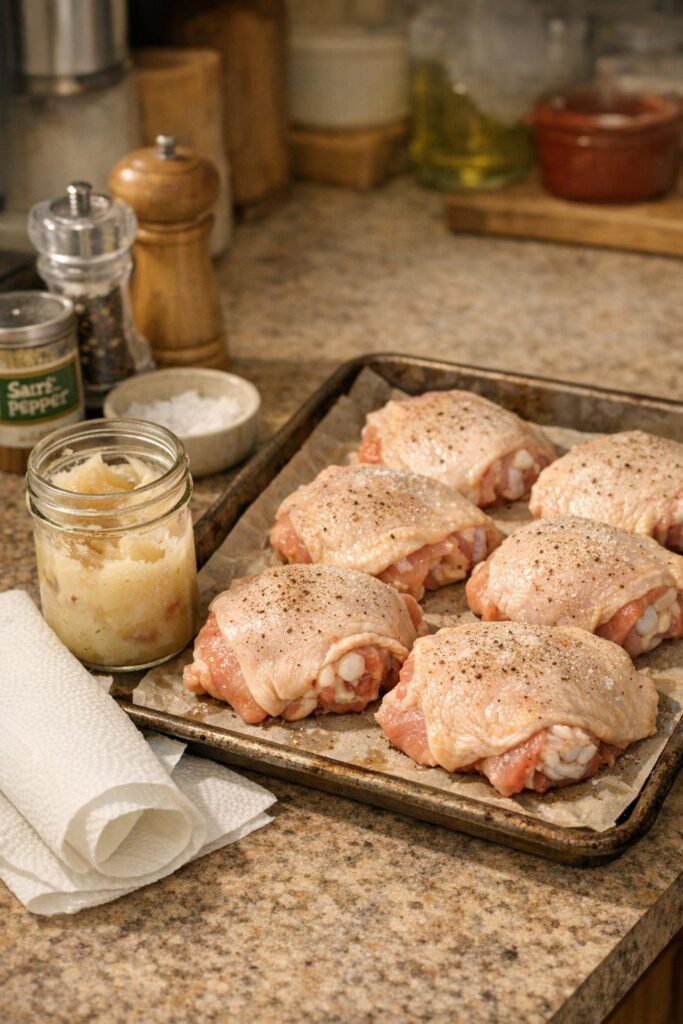
I’d heard plenty of people swear that bacon fat makes everything better, but I wanted to know what would actually happen if I used it the way I’d use butter or oil—rubbed directly over raw chicken before it went into the oven. Forty-five minutes later, I had a pretty clear answer, and it was a lot more interesting than just “it tastes like bacon.”
If you’ve ever wondered whether bacon grease is worth saving, whether it helps chicken brown, or whether it just makes dinner overly greasy, this is the kind of kitchen test that’s genuinely useful.
I’m going to walk you through exactly what I used, how I baked it, what changed in texture, flavor, and color, and a few things I’d do differently next time so you can skip the trial-and-error part.
1. Why I decided to try bacon grease on chicken
Like a lot of Midwestern home cooks, I keep a small glass jar of bacon grease in the fridge. My grandma did it, my mom did it, and now I do it too. Usually I use a spoonful for frying potatoes, sautéing green beans, or adding flavor to cornbread. But on this particular night, I had about 2 1/2 pounds of bone-in, skin-on chicken thighs and no interest in pulling out a dozen ingredients.
I wanted something simple but better than plain olive oil. Bacon grease felt like the obvious experiment because it already carries salt, smoke, and rich pork flavor. Since chicken can sometimes come out a little flat in the oven unless you season it aggressively, I figured the fat might help with both moisture and browning.
2. The exact chicken and ingredients I used
For this test, I used 6 bone-in, skin-on chicken thighs, which weighed just under 2 1/2 pounds total. I let them sit out for about 20 minutes while the oven preheated so they wouldn’t go in ice-cold straight from the fridge. That helps them cook a little more evenly.
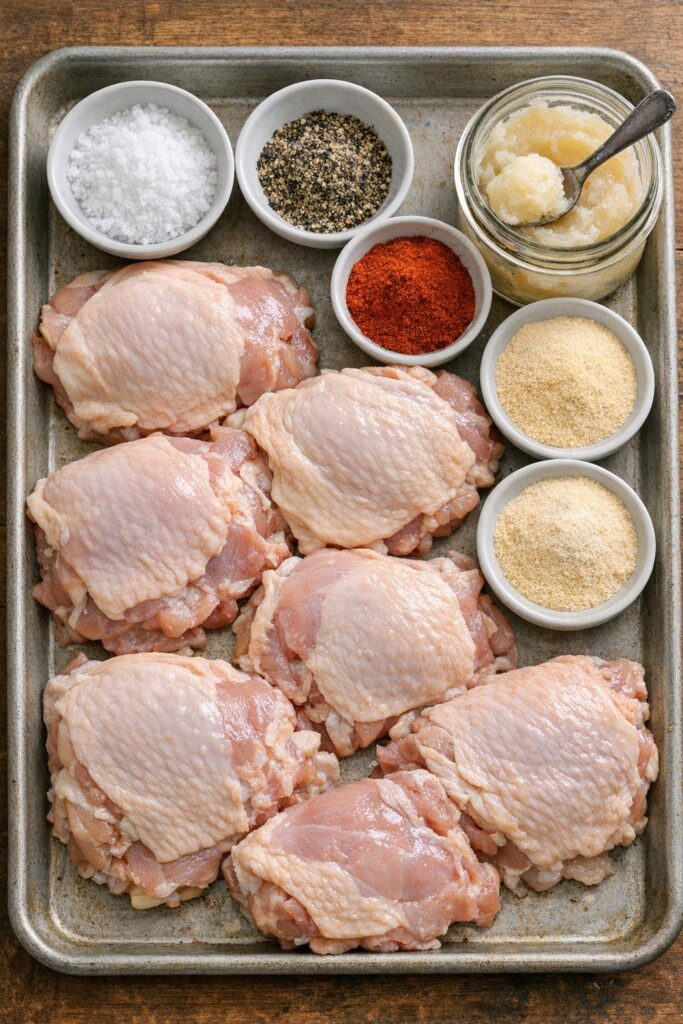
Here’s exactly what went on the chicken:
2 tablespoons bacon grease, softened but not melted
1 1/4 teaspoons kosher salt
3/4 teaspoon black pepper
1 teaspoon garlic powder
1 teaspoon paprika
1/2 teaspoon onion powder
I didn’t add extra oil or butter. The whole point was to see what the bacon grease could do on its own.
3. How I prepped the chicken before baking
The first thing I did was pat the chicken dry really well with paper towels. This matters more than people think. If the skin is wet, the fat has a harder time clinging to it, and the chicken steams before it browns. I took an extra minute here and got the skin as dry as I could.
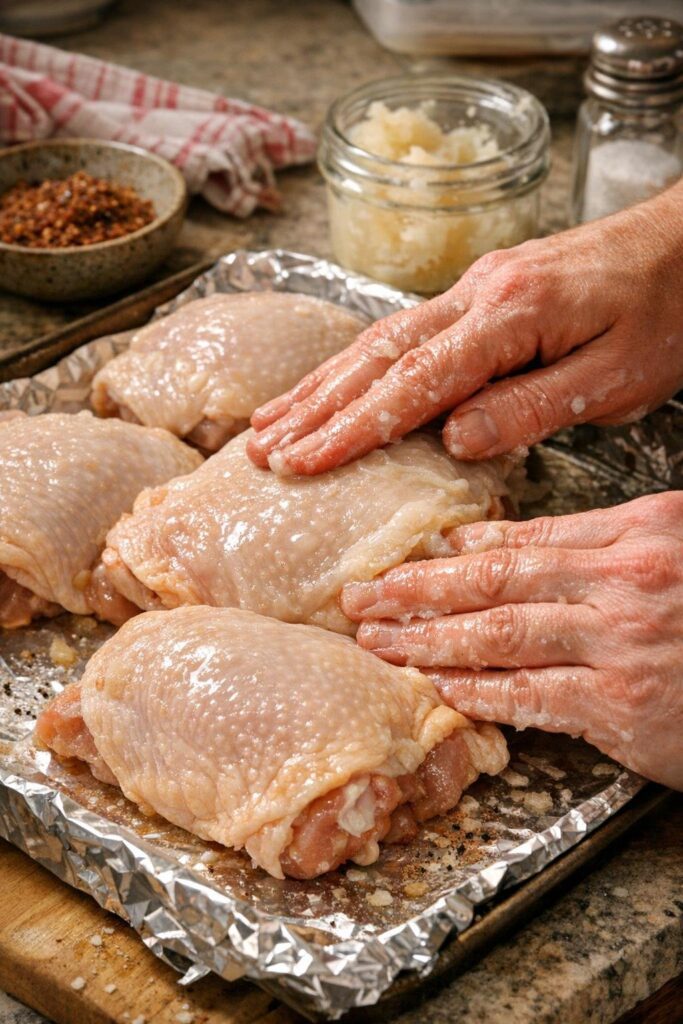
Then I rubbed about 2 teaspoons of bacon grease over each piece, focusing mostly on the skin side but lightly coating the undersides too. The grease was cool and spreadable, almost like very soft butter. Once the chicken was coated, I sprinkled the seasoning mix evenly over all 6 thighs.
4. The baking setup that made the biggest difference
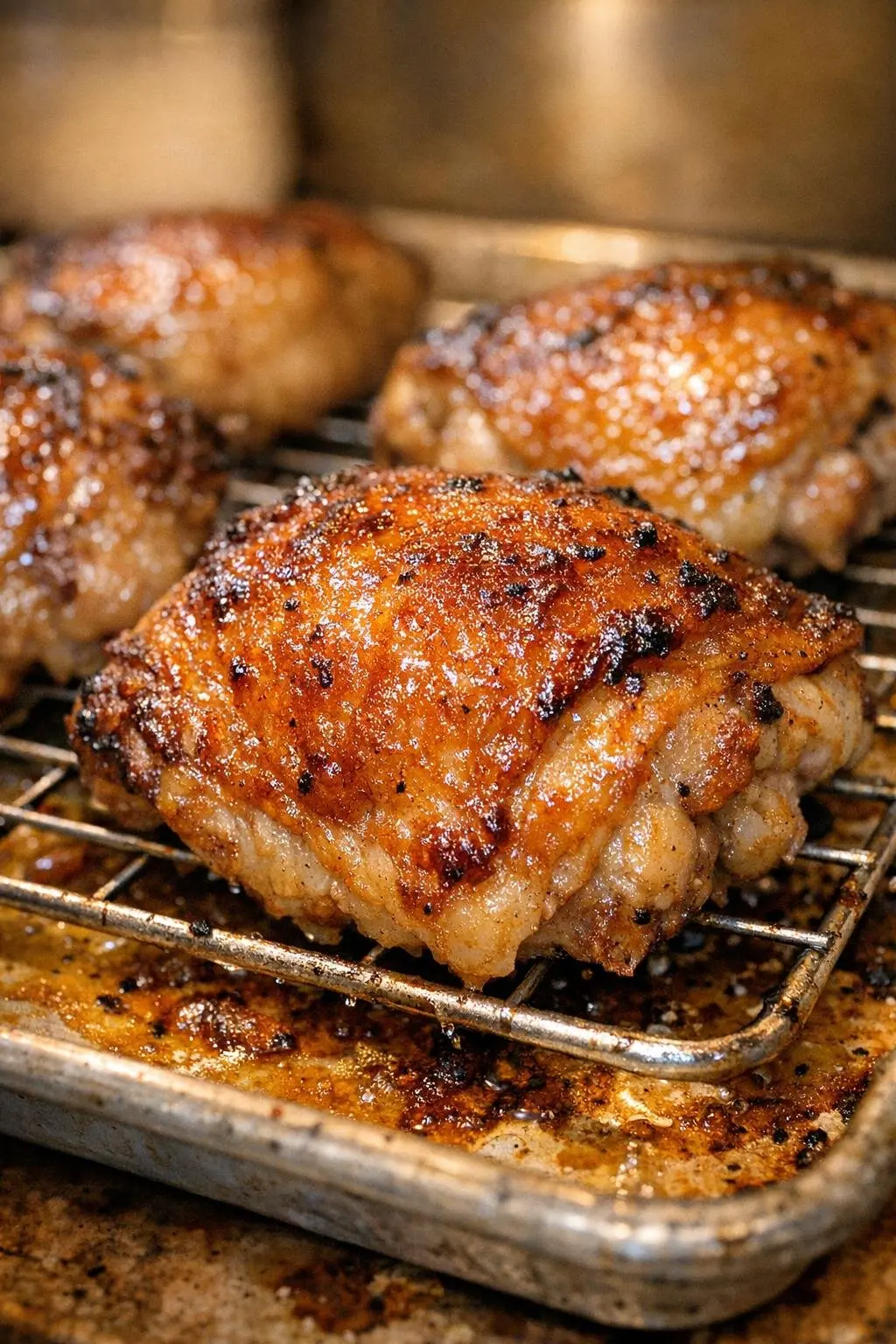
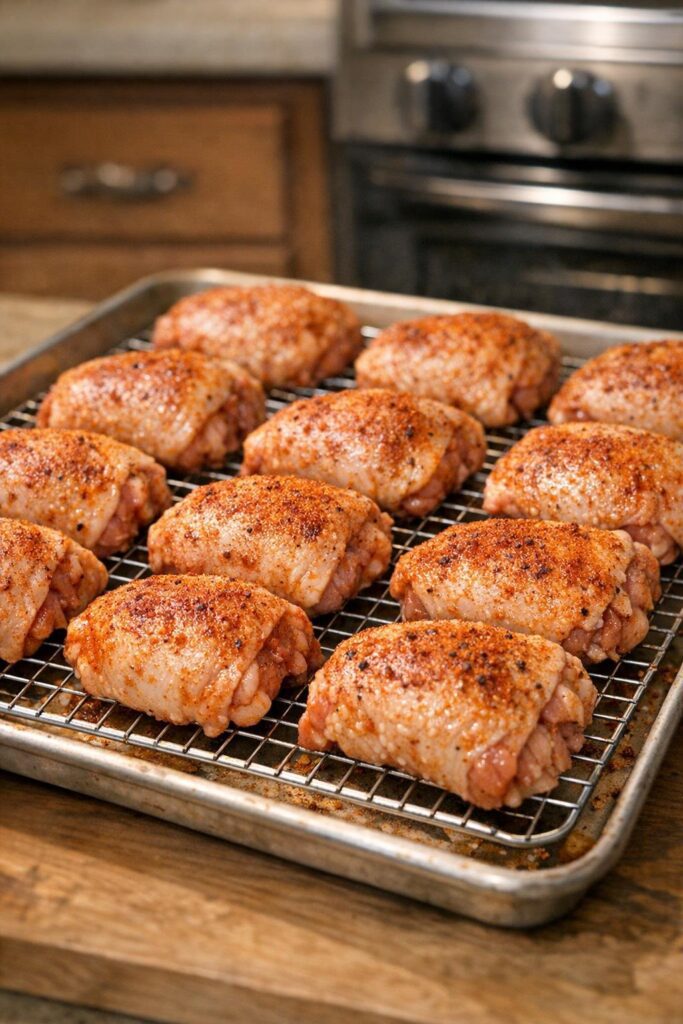
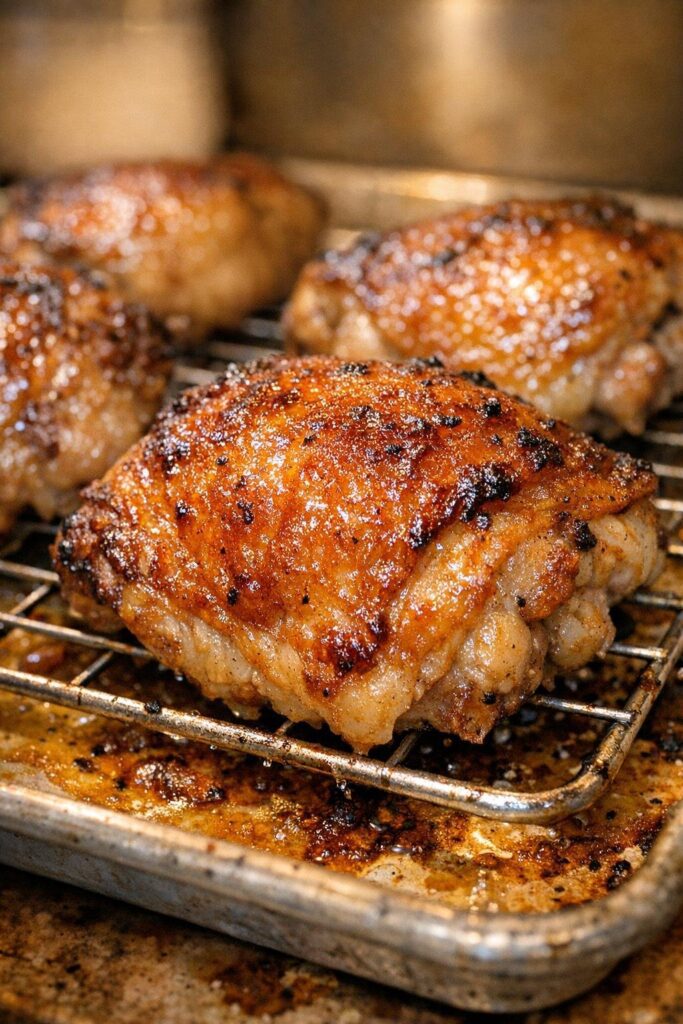
I baked the chicken on a wire rack set inside a rimmed sheet pan. If you bake chicken directly in a dish, the rendered fat collects underneath and the bottom can get soft. The rack lets hot air move around the pieces and helps the skin cook more evenly.
My oven was preheated to 425°F. I placed the pan on the center rack and baked the thighs for 45 minutes total. At that temperature, bone-in thighs usually land in the sweet spot between juicy meat and properly rendered skin. If you’re using chicken breasts, the timing would be very different, closer to 20 to 30 minutes depending on thickness.
5. What the chicken looked like after 45 minutes
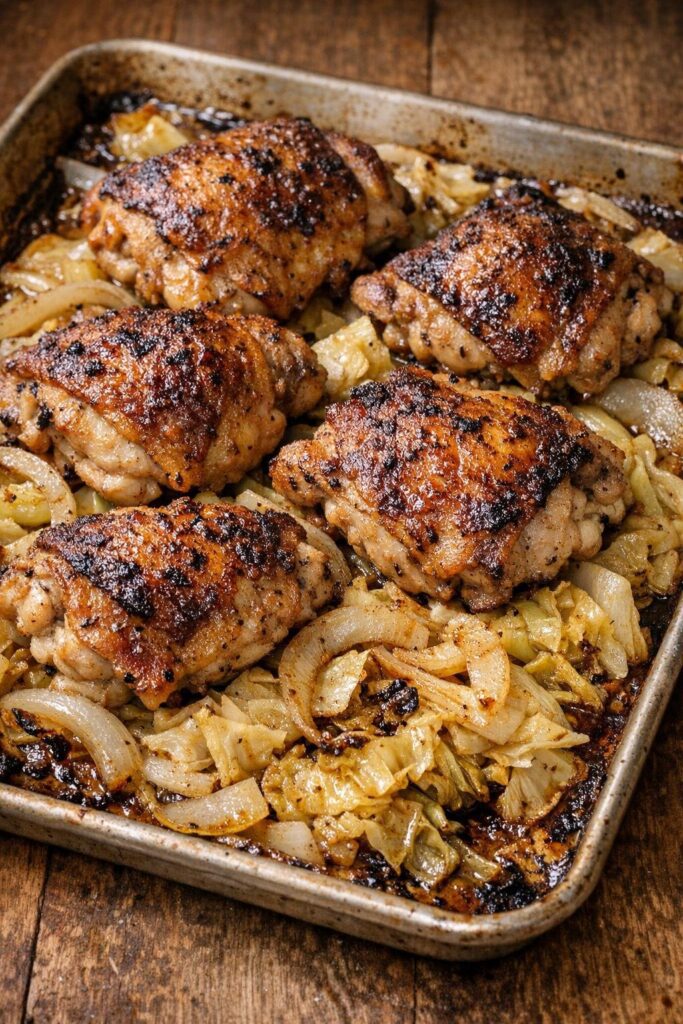
This was the part that got my attention immediately. The skin turned a deep golden brown with darker amber spots around the edges, especially on the thinner parts near the bone. It looked more evenly bronzed than the same chicken usually does with olive oil.
What surprised me most was that the color wasn’t just darker—it looked more appetizing. The skin had that roasted, glossy finish you want when you bring a pan of chicken to the table. Not burnt, not pale, and not patchy. Just richly browned in a way that made it look like I’d done more work than I actually had.
6. How the skin texture changed
The bacon grease absolutely helped the skin crisp. I wouldn’t say it turned into shatteringly crisp restaurant-style skin all over, because oven-baked chicken can still be a little softer on the underside, but the top and edges were noticeably crisper than usual.
When I tapped the top with tongs, it had that light crackly sound that tells you the fat rendered properly. The corners and thinner flaps of skin were the crispiest parts. If I wanted even more crunch next time, I’d broil it for 1 to 2 minutes at the end, watching very closely so the bacon fat doesn’t smoke too much.
7. How the meat tasted
The flavor was richer right away, but not in an overpowering, “this tastes like pork” kind of way. It gave the chicken a savory depth that plain oil just doesn’t bring. The easiest way I can describe it is that the chicken tasted more seasoned, even though I didn’t use a complicated spice blend.
The bacon flavor itself was subtle in the meat and stronger in the skin. That was actually ideal for me. I didn’t want the chicken to taste like I wrapped it in bacon; I just wanted more character. The bacon grease delivered exactly that—salty, smoky richness without taking over the whole dish.
8. Whether the chicken stayed juicy
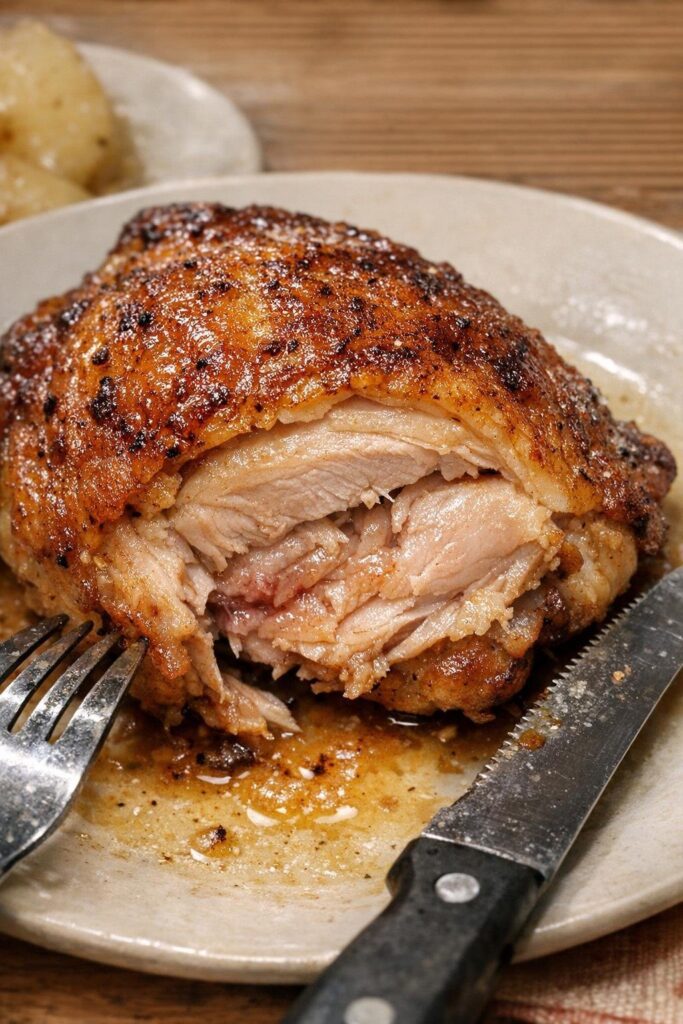
Yes, and this is one reason I’d do it again. When I checked the internal temperature with an instant-read thermometer, the thickest pieces were between 178°F and 182°F, which is actually great for chicken thighs. Thigh meat has enough fat and connective tissue to stay tender at that range.
After a 5-minute rest, the juices stayed in the meat well. When I cut into one, the inside was moist and tender, not watery and not dry. The bacon grease didn’t magically “seal in” juices—that’s a myth—but it did coat the outside well and support better browning, which made the final result feel more succulent.
9. The one downside I noticed
The biggest caution is salt. Depending on how your bacon grease was collected, it may already carry a decent amount of salt from the bacon. If you add your usual full amount of seasoning on top of that, the chicken can edge close to too salty—especially on the skin.
Mine was still very edible and tasty, but next time I’d reduce the kosher salt from 1 1/4 teaspoons to 3/4 or 1 teaspoon total for 6 thighs. If you’re using grease from especially peppery or heavily smoked bacon, keep that in mind too, because those flavors come through more than you might expect.
10. What kind of chicken this works best with
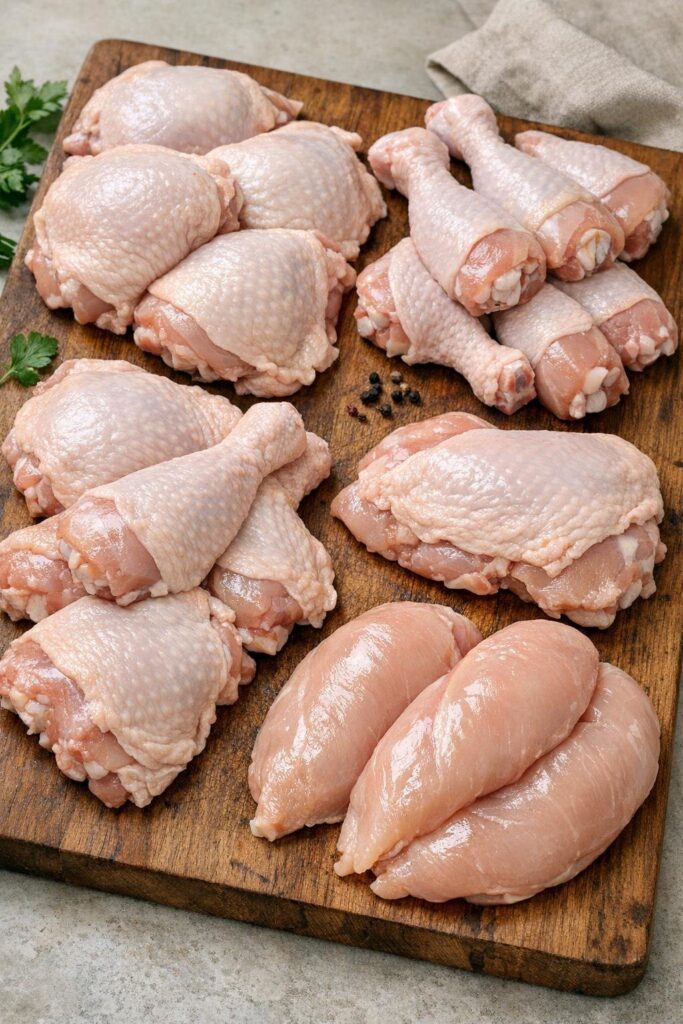
In my opinion, bacon grease is best on darker meat cuts that already have some natural fat—bone-in thighs, drumsticks, or leg quarters. Those cuts can handle the richness and longer cooking time beautifully. They also benefit most from the extra browning power.
I’d be more careful with boneless skinless breasts. Since they’re leaner, the bacon grease can add flavor, but you lose the skin-crisping payoff, which is a big part of why this trick works so well. If I were using breasts, I’d use only 1 tablespoon total for about 1 1/2 pounds of chicken and lower the oven temperature to 400°F so they don’t dry out.
11. What I’d pair it with for a full dinner
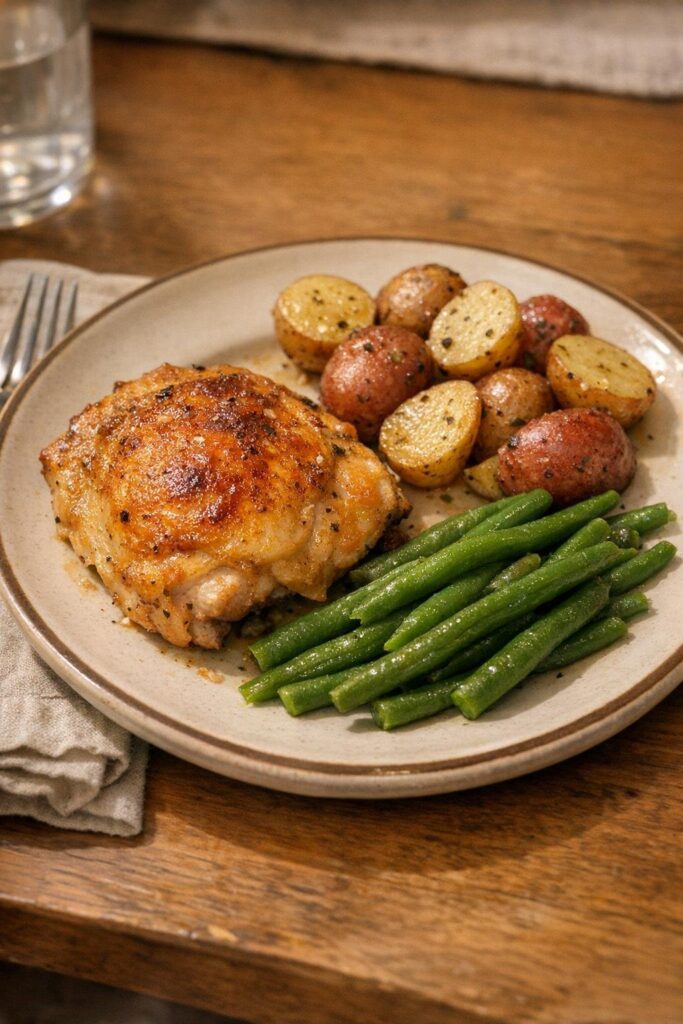
This chicken really wants simple sides. The night I made it, I served it with roasted baby potatoes and steamed green beans, and that was exactly right. The potatoes picked up any drippings from the pan, which honestly felt like a bonus side dish all by itself.
Other good pairings would be:
Buttered corn
Mac and cheese
Coleslaw
A vinegar-based cucumber salad
Roasted Brussels sprouts
Skillet cornbread
Because the chicken is rich, I like at least one side that’s fresh or acidic to balance it out.
12. How I’d tweak it next time
I was happy with the first test, but I already know how I’d refine it. First, I’d use slightly less salt, like I mentioned. Second, I’d try adding 1/2 teaspoon dried thyme or rosemary to the seasoning mix because herbs would play nicely with the smoky fat.
I’d also consider baking the chicken over sliced onions or chunks of cabbage on a sheet pan. As the bacon fat drips down, the vegetables would soak up all that flavor. That’s one of my favorite busy-weeknight habits now—letting the main dish season the side dish for me without dirtying another pan.
13. A few food safety notes that matter here
If you’re saving bacon grease, make sure it’s strained and stored properly. I keep mine in a tightly sealed glass jar in the refrigerator. It lasts a long time that way, but I still use my senses: if it smells off, looks cloudy in an unusual way, or has any hint of rancidity, I toss it.
For the chicken itself, always cook to a safe internal temperature. For chicken thighs, I personally prefer them in the 175°F to 185°F range for best texture, even though 165°F is the minimum safe temperature. And after handling raw chicken, I’m obsessive about washing cutting boards, tongs, sinks, and counters with hot soapy water. This is not the place to get casual.
14. Is it worth doing again?
Absolutely. This is one of those small kitchen tricks that feels a little old-school in the best way. It uses something I already have, adds real flavor, helps the skin brown beautifully, and makes basic baked chicken feel more special without adding much time.
As someone who’s usually trying to get dinner on the table after work without creating a mountain of dishes, I love techniques like this. It took maybe 5 extra minutes of thought, and the payoff was a pan of chicken that looked better, tasted richer, and disappeared faster than expected.

15. My final verdict after 45 minutes
So what happened 45 minutes later? The chicken came out deeply golden, crisp-skinned, juicy, and packed with savory flavor. The bacon grease didn’t just sit on the surface making things oily—it actually helped the skin render and brown while adding a subtle smoky richness that made the whole dish taste more complete.
If you’ve got a jar of bacon grease in the fridge and a tray of chicken waiting for a plan, I’d say go for it. Just dry the chicken well, season with a slightly lighter hand on the salt, and let the oven do its thing at 425°F. For such a simple move, the result was surprisingly impressive.