Meatloaf is one of those dinners that feels almost impossible to mess with.
Ground beef, breadcrumbs, egg, onion, ketchup — you mix it, shape it, bake it, and dinner is basically handled.
So when I stood in my kitchen holding a little jar of pureed baby food carrots over a bowl of raw meatloaf mixture, I definitely had a moment.
Was I about to make the juiciest meatloaf ever?
Or was I about to ruin dinner with orange mush?
Honestly, I had no clue.
Still, curiosity won.
I spooned the entire 4-ounce jar of pureed carrots into the raw meat mixture, stirred everything together, shaped the loaf, and slid it into the oven.
Fifty-five minutes later, I sliced into it.
And the result was way better than I expected.
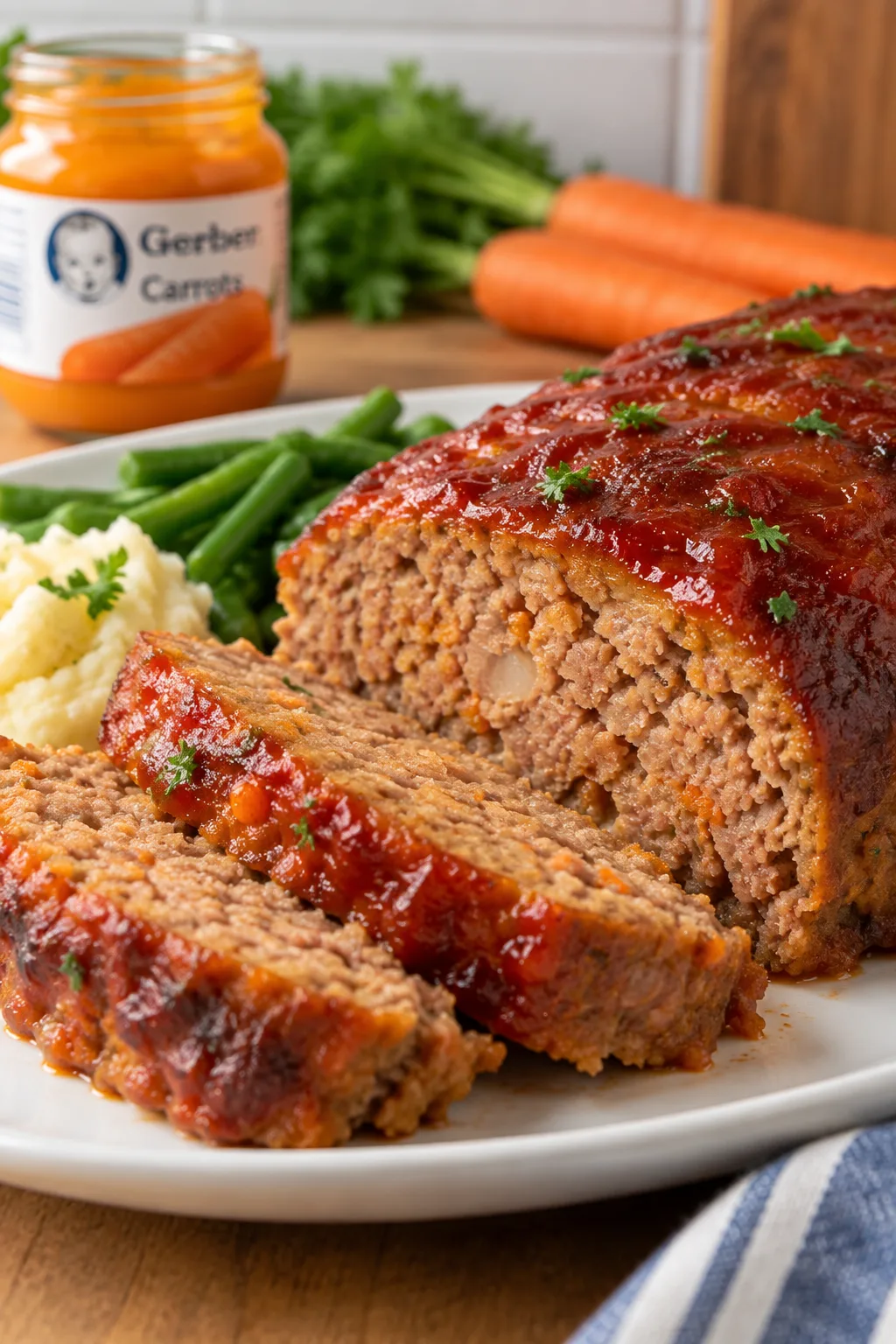
The meatloaf was moist, tender, easy to slice, and surprisingly normal-tasting. The carrots didn’t turn it into vegetable loaf. They quietly blended into the background while adding moisture and a tiny touch of sweetness.
If you struggle with dry meatloaf or want a simple way to work a little vegetable into a classic family dinner, this odd little baby food carrots meatloaf hack is worth knowing about.
Why I Put Baby Food Carrots in Meatloaf
The idea started with one problem: dry meatloaf.
I love a good old-fashioned meatloaf, but nobody gets excited about a slice that crumbles apart and needs half a bottle of ketchup just to make it feel juicy.
I wanted to add moisture without pouring extra liquid into the mixture.
That’s when the jar of baby food carrots caught my eye.
Pureed carrots have a smooth, thick texture. There are no chunks, no strings, and no vegetable pieces sticking out of the finished loaf.
That seemed perfect.
A 4-ounce jar was also small enough that I figured it wouldn’t completely change the recipe.
Worst case?
Well, pizza delivery exists for a reason.
The Simple Meatloaf Ingredients I Started With
I kept the rest of the recipe pretty basic because I wanted to see what the carrot puree actually did.
For my meatloaf, I used:
- 1 1/2 pounds ground beef
- 1/2 cup breadcrumbs
- 1 large egg
- 1/4 cup finely chopped onion
- 2 tablespoons ketchup
- 1 4-ounce jar pureed baby food carrots
- Salt, to taste
- Black pepper, to taste
You can certainly add garlic powder, Worcestershire sauce, mustard, parsley, or your favorite meatloaf seasoning.
But for this test, simple was better.
I didn’t want a bunch of bold ingredients covering up whatever change the carrot puree created.
What Happened When I Added the Carrot Puree
The change was noticeable almost immediately.
Before adding the carrots, the raw meatloaf mixture felt pretty typical — firm, slightly sticky, and easy to shape.
Once the puree went in, the mixture became softer.
Not runny.
Not sloppy.
Just softer and a little more cohesive.
The puree blended into the meat much more easily than shredded carrots would have.
There were no orange chunks anywhere.
There was a faint orange tint, sure, but once everything was mixed together, it wasn’t nearly as dramatic as I expected.
If someone walked into the kitchen at that point, I doubt they would immediately think, “Ah yes, baby food meatloaf.”
Thank goodness.
I Was Careful Not to Overmix the Meat
This part matters.
When making meatloaf, it’s tempting to keep stirring until everything looks perfectly uniform.
I try not to do that.
Too much mixing can make ground meat feel dense once cooked.
So I mixed just until the breadcrumbs, egg, onion, ketchup, seasonings, and carrot puree looked evenly distributed.
Then I stopped.
No aggressive stirring.
No smashing the mixture into submission.
Just enough mixing to bring everything together.
I Shaped the Meatloaf and Put It in the Oven
I shaped the mixture into a loaf and placed it in my baking dish.
Then I baked it at 350°F.
I expected the carrot puree might cause one of two problems.
First, I wondered whether the meatloaf would spread because of the extra moisture.
Second, I worried it might turn mushy inside.
Neither happened.
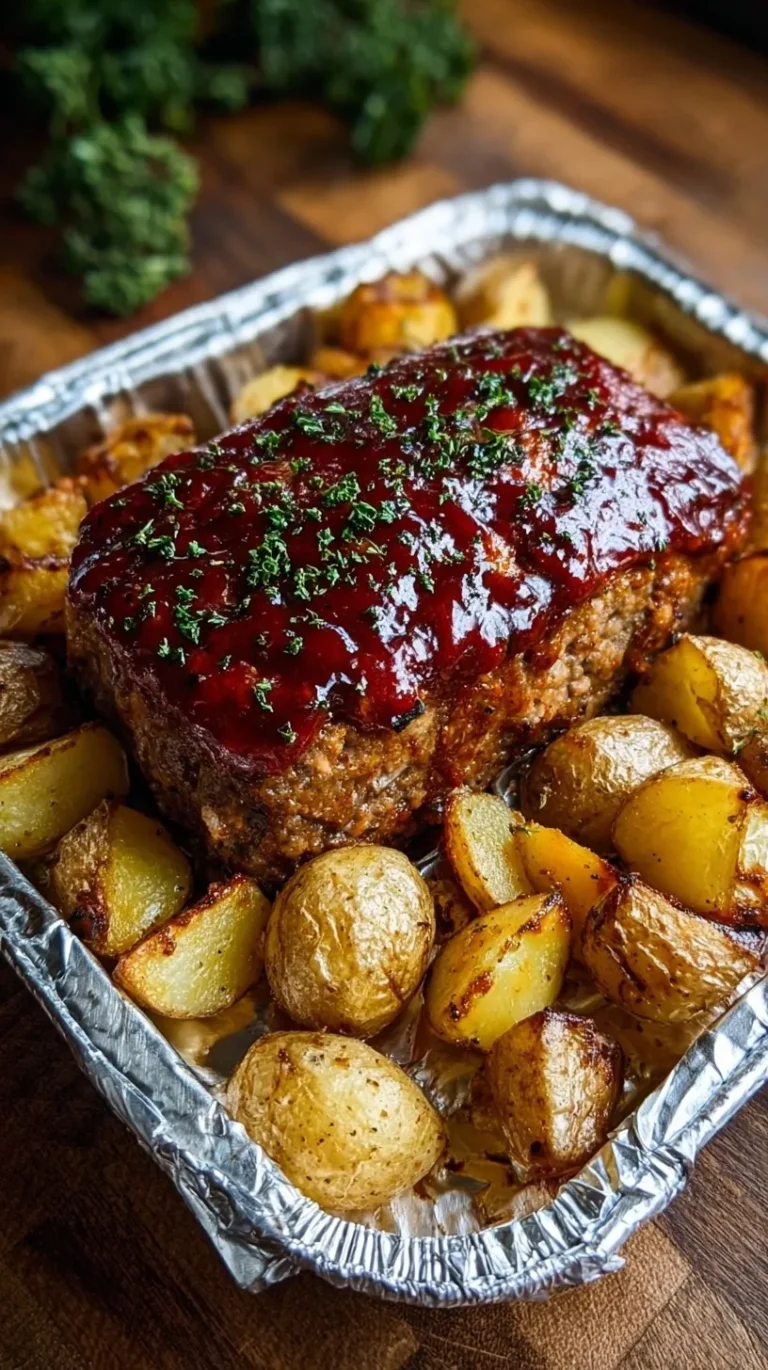
After about 55 minutes, the loaf still looked like, well, meatloaf.
A pretty good one, actually.
The top had browned nicely, the edges looked slightly caramelized, and the loaf had kept its shape.
No strange puddle of carrot puree.
No orange disaster.
So far, so good.
What the Meatloaf Looked Like After 55 Minutes
This was the moment I had been waiting for.
I pulled the meatloaf from the oven and let it rest before slicing.
The outside had developed that classic browned meatloaf appearance.
The orange color I had noticed in the raw mixture was barely visible once it was cooked.
If I served it without saying anything, I don’t think most people would guess there were pureed carrots inside.
Then I cut the first slice.
That’s when the biggest difference showed up.
The inside looked noticeably moist.
It wasn’t greasy, and it wasn’t wet.
It just looked tender.
You know how some meatloaf practically crumbles the second a knife touches it?
This one didn’t.
The slices stayed together beautifully.
The Carrot Puree Made the Meatloaf Juicier
This was easily my favorite part of the experiment.
The baby food carrots seemed to help the meatloaf stay moist during baking.
Each slice felt tender rather than dry or crumbly.
That matters because meatloaf can lose moisture pretty quickly in the oven, especially if the meat is lean or the loaf gets baked a little too long.
The carrot puree gave the mixture another source of moisture without making the loaf taste watery.
And frankly, that was the part I wasn’t expecting.
I thought the puree might make the meatloaf soft in a weird way.
Instead, it gave the texture a pleasant tenderness.
Did the Meatloaf Taste Like Carrots?
This was the big question.
And the answer, at least with one 4-ounce jar, was: barely.
The carrots added a mild sweetness, but the meatloaf did not taste like carrots.
You still get the familiar savory flavor of beef, onion, ketchup, and seasonings.
The puree sits quietly in the background.
If anything, the slight sweetness worked nicely with the ketchup.
That makes sense when you think about it. Meatloaf recipes often contain mildly sweet ingredients already, including ketchup, barbecue sauce, brown sugar, or sweet glaze.
The carrots didn’t feel out of place at all.
The Texture Was Softer Without Becoming Mushy
I’m pretty picky about meatloaf texture.
I want it tender, but I still want an actual slice.
Nobody wants meat pudding.
Thankfully, the carrot puree didn’t push things that far.
The meatloaf had a softer texture than my standard version, but it was still firm enough to slice cleanly.
In fact, the slices held together better than I expected.
That surprised me because the raw mixture had felt noticeably softer.
I assumed that might translate into a loose finished loaf.
Instead, the egg, breadcrumbs, meat, and carrot puree worked together nicely.
Did the Baby Food Help the Meatloaf Hold Together?
In my batch, yes.
Each slice stayed intact when I moved it from the baking dish to the plate.
There was very little crumbling around the edges.
The puree seemed to help create a cohesive mixture before baking, while the breadcrumbs and egg still did their usual job of holding everything together.
That combination worked especially well.
I wouldn’t replace the breadcrumbs or egg with carrot puree, though.
Think of the carrots as an extra ingredient rather than a replacement for the usual binders.
You Get Extra Vegetables Without Big Carrot Pieces
This trick also gives you an easy way to add carrots without changing the appearance of dinner very much.
Now, I’m not pretending one little jar suddenly turns meatloaf into a salad.
It’s still meatloaf.
But adding pureed carrots does bring some vegetable content into a meal that usually centers almost entirely on meat.
And because the carrots are already smooth, you don’t get noticeable chunks.
That may appeal to families where visible vegetables immediately trigger suspicious looks across the dinner table.
You know the look.
“What is that green thing?”
With carrot puree, there’s not much to spot.
My Family Didn’t Immediately Guess the Secret Ingredient
This was the fun part.
I served the meatloaf normally and didn’t announce what I had done.
Nobody looked at the plate and screamed, “Why is there baby food in dinner?”
Always a promising start.
The first thing people noticed was the moisture.
The slices were tender and juicy, and the meatloaf didn’t feel dry.
Once I mentioned the carrots, everyone suddenly started examining their slices like food detectives.
But the carrot flavor was still hard to identify.
The response was basically: “Wait, really?”
And honestly, that’s exactly what I wanted.
Would I Add Baby Food Carrots to Meatloaf Again?
Yep.
I would.
Not because the original meatloaf recipe was bad, but because this is such an easy little trick.
There’s no peeling.
No chopping.
No grating carrots all over the cutting board.
You just open the jar and stir.
That’s it.
For busy weeknight cooking, I can appreciate that.
I especially like the idea when using leaner ground meat, which can sometimes produce a drier loaf.
The added puree gives you a little extra moisture insurance.
How Much Baby Food Should You Add to Meatloaf?
For 1 1/2 pounds of ground beef, one 4-ounce jar of pureed carrots worked well for me.
I wouldn’t immediately double that amount.
Too much puree could make the mixture overly soft and change the structure of the finished loaf.
Start small.
Four ounces gives you enough carrot puree to add moisture without turning it into the main ingredient.
If your meatloaf mixture already contains a lot of liquid from milk, tomato sauce, Worcestershire sauce, or other ingredients, you may want to slightly reduce another wet ingredient.
The goal is moist meatloaf, not soup wearing a beef costume.
Use Plain Pureed Carrots
Check the ingredient label before adding baby food to your meatloaf.
Plain pureed carrots are what you want.
Skip blends containing fruit, sweeteners, or other flavors that might clash with a savory dinner.
A simple carrot puree makes the most sense because it blends easily with common meatloaf seasonings.
The fewer surprises inside that little jar, the better.
A Quick Tip for Better Meatloaf
After shaping the loaf, try not to pack the meat too tightly.
I know it’s tempting to press everything down until it feels neat and solid.
But a tightly packed meatloaf can become dense.
Shape it gently instead.
You want it firm enough to hold together but not compressed like you’re packing a suitcase for a three-week vacation.
That small difference can give the finished loaf a nicer texture.
Let the Meatloaf Rest Before Slicing
Do not skip the resting time.
I know.
Dinner smells good.
Everybody is hungry.
Someone is probably already standing in the kitchen asking, “Is it ready?”
Still, give the meatloaf a few minutes before cutting into it.
Resting helps the juices settle inside the loaf and makes cleaner slices easier.
Cut too quickly, and all that moisture you worked so hard to keep can end up sitting in the bottom of the pan.
Patience pays off here.
Don’t Judge Doneness by Time Alone
The 55-minute baking time worked for my loaf, but cooking time can vary.
The size and shape of the loaf matter.
So does your oven.
A thicker loaf may need longer, while a flatter one may cook faster.
Check the center with a food thermometer before serving rather than relying only on the clock.
That way, you know the meatloaf is cooked properly without leaving it in the oven longer than necessary.
You Can Still Add a Classic Meatloaf Glaze
Adding carrots doesn’t mean you have to give up the best part: the glaze.
You can spread ketchup over the top before baking or make a sweeter glaze with ketchup, brown sugar, and a little mustard.
Barbecue sauce works too.
The mild carrot flavor pairs nicely with traditional meatloaf toppings, so there’s no need to change the whole recipe.
I’d actually argue that a glossy ketchup glaze makes the hidden-carrot trick even harder to spot.
Could You Try Other Vegetable Purees?
Probably, though I’d start cautiously.
Carrots work especially well because they have a mild flavor and natural sweetness.
Sweet potato puree might behave similarly, although it has a stronger flavor.
Pumpkin could also work in small quantities, but you’d want plain pumpkin puree — definitely not pumpkin pie filling.
Pea or green bean baby food?
Uh, that might be where I personally draw the line.
But hey, somebody out there is probably willing to test it.
This Meatloaf Trick Is Perfect for Busy Weeknights
The biggest advantage of this hack may be convenience.
Traditional ways of adding vegetables to meatloaf often involve grating carrots, sautéing onions, chopping peppers, or cooking vegetables first.
Baby food puree is already smooth and ready to mix.
Open.
Spoon.
Stir.
Done.
That’s pretty handy when it’s 5:30 p.m., everyone wants dinner, and your motivation level is somewhere between “make meatloaf” and “eat cereal over the sink.”
The Final Verdict on Baby Food Carrot Meatloaf
I went into this experiment expecting something strange.
Instead, I got a genuinely good meatloaf.
The pureed baby food carrots made the mixture softer before baking, helped the finished loaf stay moist, added mild sweetness, and blended into the meat without creating obvious carrot chunks.
Most importantly, the meatloaf still tasted like meatloaf.
That’s the key.
This isn’t one of those kitchen hacks where you technically succeed but nobody wants a second serving.
I’d actually make this again.
So, if there’s a lonely 4-ounce jar of pureed carrots sitting in your pantry, you might want to look at your next meatloaf a little differently.
Stir it in.
Bake your usual loaf.
Then see whether anyone at the dinner table can figure out what you changed.
Just maybe don’t tell them beforehand.
Sometimes dinner experiments are more fun that way.