You’re halfway through prepping chicken for tomorrow’s dinner when you realize something annoying.
No buttermilk.
Not even a sad little splash hiding behind the orange juice.
But there’s a container of plain yogurt sitting in the fridge.
Can you use that instead?
Yep, and it can make some seriously tender, juicy chicken.
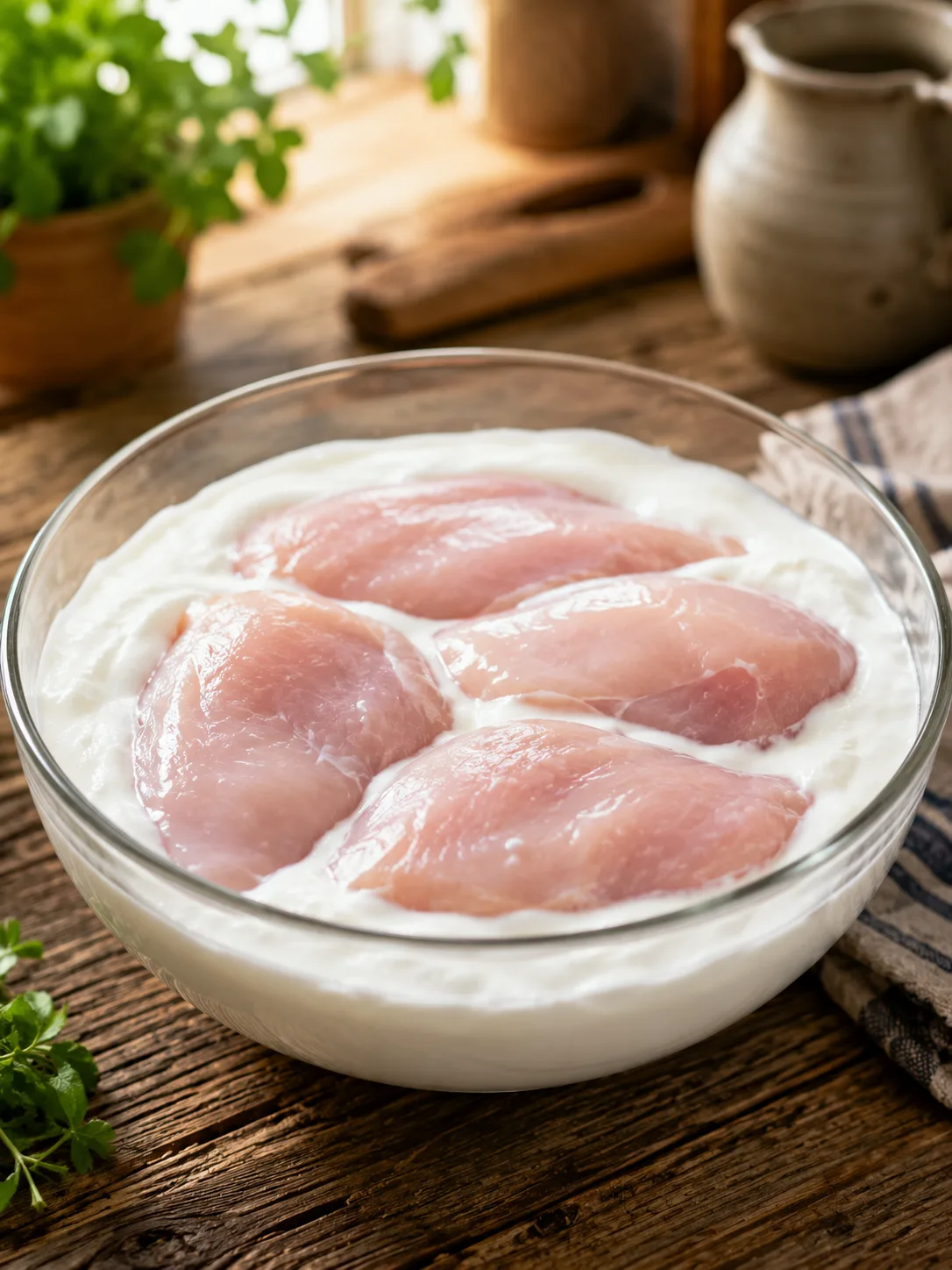
The idea behind a yogurt chicken marinade is simple. Yogurt contains lactic acid, and its thick texture helps seasonings stay in contact with the chicken. An overnight rest can produce tender, flavorful meat without requiring a special carton of buttermilk.
The key is using plain yogurt, keeping the raw chicken refrigerated the entire time, and cooking it to a safe internal temperature.
Here’s what happens when chicken sits in yogurt overnight—and how to do it right.
Can You Marinate Chicken in Yogurt Overnight?
Yes.
Chicken can be marinated in plain yogurt overnight as long as it remains properly refrigerated.
A 12-hour marinade is especially convenient because you can prepare everything after dinner, put the chicken in the refrigerator, and cook it the following day.
That long rest gives the yogurt and seasonings plenty of time to coat the meat.
And unlike a quick splash of lemon juice, yogurt provides a thick coating that clings to every little surface.
Basically, your chicken gets tucked into a yogurt blanket overnight.
Not glamorous, perhaps.
But tasty? Absolutely.
What Does Yogurt Do to Chicken?
Plain yogurt contains lactic acid.
Acid affects proteins on the surface of meat, which is one reason acidic ingredients appear in so many marinades.
However, yogurt is relatively mild compared with strongly acidic marinades based heavily on lemon juice or vinegar.
Its thickness is another advantage.
Yogurt sticks to the chicken, so garlic, paprika, cumin, pepper, herbs, and other seasonings don’t immediately slide into the bottom of the bowl.
The result can be chicken with a nicely seasoned exterior and tender texture.
Why Yogurt and Chicken Are Such a Classic Combination
Yogurt-marinated chicken isn’t some new social media kitchen trick.
Versions of the technique appear across many cooking traditions, particularly in South Asian, Middle Eastern, Mediterranean, and Central Asian cuisines.
There’s a reason cooks keep coming back to it.
Yogurt brings acidity, moisture, body, and a subtle tang to a marinade.
Add garlic, spices, salt, and herbs, and you’ve got a marinade that does much more than simply make chicken wet.
Plus, plain yogurt is something many of us already have sitting in the refrigerator.
That’s a win on a busy weeknight.
Yogurt vs. Buttermilk for Chicken
Buttermilk is famous for fried chicken.
Yogurt deserves some attention too.
Both ingredients contain lactic acid and can work well in chicken marinades, but their consistency differs considerably.
Buttermilk is thin and easily surrounds pieces of chicken.
Yogurt is thicker.
That thick texture makes yogurt especially good at holding seasonings against the meat.
If you’re substituting yogurt for buttermilk in a recipe that needs a thinner marinade, you can mix plain yogurt with a small amount of water or milk until you reach the consistency you want.
For a grilled or roasted chicken marinade, I often like the thicker coating just fine.
What Kind of Yogurt Is Best for Chicken Marinade?
Use plain, unsweetened yogurt.
Regular plain yogurt works beautifully.
Plain Greek yogurt can also work, although it’s considerably thicker. You may want to loosen it with a splash of water.
Avoid flavored yogurt.
Vanilla chicken isn’t the dinner experiment anybody asked for.
Also check the ingredient label if you’re trying to avoid added sugar.
Plain means plain.
An Easy Yogurt Chicken Marinade
You don’t need a mile-long ingredient list.
For about 1½ to 2 pounds of boneless chicken breasts, try:
- 1 cup plain yogurt
- 1 tablespoon olive oil
- 2 or 3 minced garlic cloves
- 1 teaspoon kosher salt
- 1 teaspoon paprika
- ½ teaspoon black pepper
- ½ teaspoon ground cumin
- ½ teaspoon onion powder
- Optional chopped parsley or cilantro
Mix everything in a bowl.
Add the chicken and coat every piece thoroughly.
Cover the bowl or transfer everything to a food-safe sealed container.
Then refrigerate.
Easy enough for a Tuesday night.
How Long Should Chicken Marinate in Yogurt?
You don’t necessarily need 12 hours.
Even a few hours can give the chicken plenty of contact with the marinade.
For meal prep, an overnight marinade is convenient.
A practical window is roughly 4 to 12 hours for many boneless chicken recipes.
You can prepare the chicken before bed and cook it for lunch or dinner the next day.
I wouldn’t leave raw chicken sitting around for days simply because it’s covered in yogurt.
Marinating doesn’t stop normal food-safety rules.
Always Marinate Chicken in the Refrigerator
This part isn’t optional.
Raw chicken should never sit on the kitchen counter for an overnight marinade.
Keep it refrigerated at 40°F (4°C) or below.
The yogurt doesn’t make raw chicken safe at room temperature.
Neither does salt.
Neither do spices.
And, nope, garlic isn’t going to save the situation either.
Use a covered food-safe container or sealed bag and place it in the refrigerator immediately.
Don’t Wash Raw Chicken First
You don’t need to rinse raw chicken before adding it to your marinade.
In fact, food-safety authorities advise against washing raw poultry because splashing water can spread bacteria around the sink, faucet, counters, utensils, and nearby food.
Take the chicken from its package and place it directly into your prepared marinade.
Then wash your hands and clean any surfaces that contacted the raw poultry.
Less mess.
Less splashing.
Much better.
Should You Poke Holes in Chicken Before Marinating?
You don’t need to stab chicken breasts with a fork before adding them to yogurt.
Seasonings primarily affect the exterior, and puncturing the meat isn’t necessary for a successful marinade.
If your chicken breasts are extremely thick, there’s a better trick.
Make them an even thickness.
You can carefully slice very thick breasts horizontally into thinner cutlets or gently pound them between appropriate sheets until they’re more uniform.
That helps them cook evenly.
Nobody wants one end dry while the thick middle is still catching up.
What Happens After 12 Hours in Yogurt?
After an overnight rest, you’ll probably notice that the yogurt coating has become more closely attached to the chicken.
The exterior may look slightly different from when it first entered the bowl.
That’s normal for marinated meat.
Once cooked, the yogurt-coated surface can brown nicely, particularly with grilling, roasting, or pan cooking.
Just remember that visual appearance before cooking isn’t a reliable measure of food safety.
Proper refrigeration and final cooking temperature matter far more.
Should You Remove the Yogurt Before Cooking?
Remove the chicken from the marinade and let the heavy excess drip away.
You don’t need to scrub the chicken clean.
A thin yogurt coating can remain.
However, an extremely thick layer may scorch before the center of a thick chicken breast finishes cooking, particularly over direct high heat.
For grilling, gently scrape away large globs.
For oven cooking, a little more coating can usually remain.
You’ll quickly figure out your favorite balance.
And yes, “large globs” is now an official cooking measurement in my kitchen.
How to Bake Yogurt-Marinated Chicken
Baking is probably the easiest method.
Preheat your oven to around 425°F.
Remove excess marinade from the chicken and arrange the pieces in a lightly greased baking dish or on a suitable baking sheet.
Bake until the thickest part of each chicken breast reaches 165°F (74°C).
Cooking time varies with thickness, so use a food thermometer instead of relying entirely on the clock.
A thin cutlet and a giant chicken breast shaped like a football obviously aren’t finishing at the same time.
How to Grill Yogurt-Marinated Chicken
Yogurt chicken is fantastic on the grill.
Remove thick excess marinade first because dairy solids and seasonings can brown quickly.
Lightly oil your grill grates according to your usual grill routine and cook the chicken over controlled heat.
Turn as needed and check the center with an instant-read thermometer.
Chicken is ready when its safe internal temperature reaches 165°F in the thickest portion.
Then let it rest briefly before slicing.
That first juicy slice?
That’s why we’re here.
Can You Cook It in an Air Fryer?
Sure.
Yogurt-marinated chicken works well in an air fryer, especially when you use thinner, evenly sized pieces.
Shake or scrape away heavy excess marinade before cooking.
Arrange the chicken so air can circulate rather than piling pieces on top of each other.
Because air fryers vary significantly, don’t depend on one universal cooking time.
Check doneness with a food thermometer.
Again: 165°F in the thickest part.
Add Spices Before Marinating
Yogurt is basically a blank canvas.
Okay, a tangy white blank canvas.
You can take the marinade in several directions.
For a smoky version, add paprika, garlic, black pepper, and cumin.
For something bright, add herbs and a little lemon zest.
For heat, add cayenne or chili flakes.
For a curry-inspired version, try cumin, coriander, turmeric, garlic, ginger, and garam masala.
The yogurt carries those flavors across the surface of the chicken beautifully.
Don’t Go Crazy With Extra Acid
Because yogurt already contains acid, you don’t need to drown the marinade in lemon juice or vinegar.
A little can add flavor.
A lot isn’t automatically better.
If you want strong lemon flavor, zest is your friend.
Lemon zest brings that bright citrus aroma without adding nearly as much extra liquid acid as pouring in half a cup of juice.
Tiny kitchen trick. Big difference.
Can You Use the Leftover Yogurt Marinade as Sauce?
Not directly.
Once marinade has contacted raw chicken, treat it as contaminated with raw poultry juices.
Do not spoon that uncooked marinade over finished chicken.
If you want a yogurt sauce for serving, make a separate batch before the raw chicken enters the picture.
For example, combine fresh plain yogurt with garlic, herbs, salt, and a squeeze of lemon.
Set it aside in the refrigerator.
Now you’ve got a cool sauce ready for dinner without playing food-safety roulette.
What If You Really Want to Use the Marinade?
A marinade that has contacted raw poultry would need to be thoroughly cooked before it could safely be considered for use as a sauce.
But honestly?
For a yogurt sauce, making a fresh little bowl is easier and usually tastes better.
It takes about two minutes.
Some kitchen shortcuts aren’t worth the mental gymnastics.
Can You Freeze Chicken in Yogurt Marinade?
Yes, freezing marinated chicken can be handy for meal prep.
Put fresh chicken and yogurt marinade into a freezer-safe container or bag and freeze promptly.
When you’re ready to use it, thaw the chicken safely in the refrigerator.
Don’t thaw raw chicken on the counter.
Also remember that freezing pauses bacterial growth but doesn’t magically sterilize raw poultry.
Normal raw-chicken handling rules still apply after thawing.
What to Serve With Yogurt-Marinated Chicken
This chicken plays nicely with almost everything.
Try it with:
- Roasted potatoes
- Rice
- Couscous
- Warm pita
- Cucumber salad
- Roasted vegetables
- Tomato salad
- Grilled corn
- Green salad
- Garlic sauce
For a quick dinner, I love sliced yogurt chicken over rice with cucumber, tomatoes, herbs, and a spoonful of fresh yogurt sauce.
It looks like you tried really hard.
You don’t have to tell anyone otherwise.
The Biggest Mistakes to Avoid
The technique is easy, but a few mistakes can mess with the results.
Don’t use sweetened or flavored yogurt.
Don’t leave raw chicken marinating at room temperature.
Don’t reuse uncooked marinade that touched raw poultry.
Don’t rely only on cooking time to determine doneness.
Don’t overcrowd the pan or air fryer.
And don’t assume more acid automatically means more tender chicken.
Keep things simple.
Yogurt, salt, spices, refrigeration, and proper cooking will get you pretty far.
Frequently Asked Questions
Can chicken sit in yogurt overnight?
Yes. Chicken can marinate in plain yogurt overnight when it is kept properly refrigerated at 40°F or below. An overnight rest of around 8 to 12 hours works well for many recipes.
Does yogurt make chicken tender?
Yogurt contains lactic acid and can affect proteins on the meat’s surface. Its thick consistency also keeps seasonings in close contact with the chicken, which can produce tender, flavorful results.
Is yogurt better than buttermilk for chicken?
Neither is universally better. Buttermilk is thinner, while yogurt creates a thicker coating. Both can work well depending on the recipe and cooking method.
Can Greek yogurt be used to marinate chicken?
Yes. Plain Greek yogurt works, but its thick consistency may benefit from a small splash of water to make coating easier.
How long is too long to marinate chicken in yogurt?
For many boneless chicken recipes, several hours or overnight is plenty. Don’t use marinating as a reason to keep raw poultry beyond safe refrigerated storage periods.
Should I rinse yogurt off chicken before cooking?
No. Remove heavy excess marinade, but you don’t need to rinse the chicken with water.
Can I cook yogurt-marinated chicken on the grill?
Yes. Remove excess yogurt to reduce scorching and grill until the thickest portion of the chicken reaches 165°F.
Can leftover yogurt marinade be eaten?
Do not consume uncooked marinade that has touched raw chicken. Make a separate batch for serving, or follow safe cooking practices if a recipe specifically calls for cooking a used marinade.
What temperature should chicken breast reach?
Chicken should reach a safe internal temperature of 165°F (74°C). Check the thickest part with a food thermometer.
Final Thoughts
So, can plain yogurt stand in for buttermilk when you’re staring at raw chicken and an empty buttermilk carton?
Absolutely.
An overnight yogurt chicken marinade can give chicken a flavorful coating and tender texture while using an ingredient you may already have in the fridge.
Keep the formula simple.
Use plain unsweetened yogurt. Add salt, garlic, and your favorite spices. Coat the chicken well. Refrigerate it overnight. Remove heavy excess marinade before cooking, and bring the chicken to 165°F.
Most importantly, remember that yogurt is a marinade—not a food-safety shield.
Keep raw chicken cold, avoid cross-contamination, and don’t serve uncooked marinade that has touched poultry.
Then serve that juicy chicken with rice, roasted potatoes, salad, or warm pita.
And next time you realize you’re out of buttermilk?
You might not even care.