
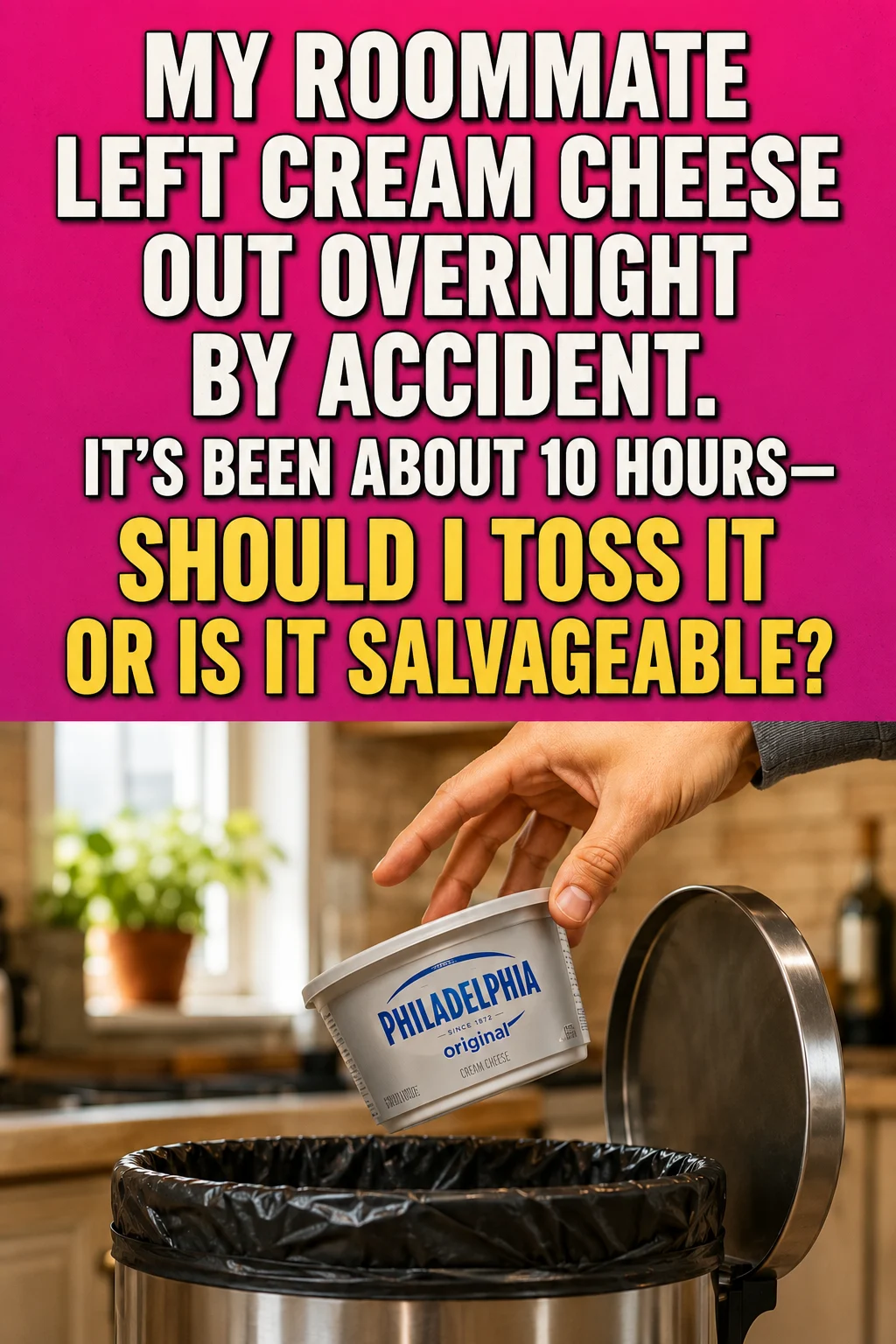
Should You Eat Cream Cheese That Was Left Out Overnight?
Picture this: you’re cleaning up after dinner and notice a package of cream cheese sitting on the kitchen counter. Maybe someone forgot to put it back in the refrigerator after making bagels, cheesecake, or a favorite dip. It’s been there all night, and now you’re wondering if it’s still safe to eat.
Let’s face it—nobody likes throwing away food. Cream cheese isn’t exactly cheap, and it can feel wasteful to toss an unopened or barely used package. Still, when it comes to dairy products, food safety should always come first.
Here’s what you need to know before spreading that cream cheese on your morning bagel.
Why Cream Cheese Needs Refrigeration
Cream cheese is a soft dairy product made from milk and cream. Unlike hard cheeses, it contains a high amount of moisture. That moisture creates an environment where bacteria can multiply quickly when the product is left at room temperature.
Refrigeration slows bacterial growth and helps keep cream cheese fresh. Once it sits out for several hours, the risk of harmful bacteria increases.
Even if the cream cheese still looks perfectly fine, it may no longer be safe to eat.
The Two-Hour Rule
Food safety experts generally recommend following the two-hour rule for perishable foods.
If cream cheese has been sitting at room temperature for more than two hours, it should be discarded.
If the room is especially warm—above 90°F (32°C)—the recommended time drops to just one hour.
This guideline applies whether the package has been opened or not.
What Happens When Cream Cheese Sits Out?
Many people think food will smell bad or grow mold before it becomes dangerous.
Unfortunately, that’s not always true.
Harmful bacteria can grow without changing the:
- Color
- Smell
- Taste
- Texture
That means cream cheese can appear completely normal while still carrying bacteria that could make someone sick.
Can You Just Scrape Off the Top?
No.
Unlike hard cheeses, cream cheese is soft all the way through. If bacteria begin growing, they can spread throughout the entire container.
Removing the top layer does not make the rest of the cream cheese safe.
The safest choice is to throw away the entire package if it has been left out too long.
What About Cooking It?
Some people wonder if baking or cooking cream cheese later will solve the problem.
Sadly, that’s not a reliable solution.
While heat can destroy many bacteria, some bacteria produce toxins that remain even after cooking.
Because you can’t tell whether those toxins are present, cooking isn’t considered a safe fix.
How Long Can Cream Cheese Stay Out?
Here’s a simple guide.
| Time at Room Temperature | Recommendation |
|---|---|
| Less than 2 hours | Usually safe to refrigerate and use. |
| 2 to 4 hours | Best to discard. |
| More than 4 hours | Throw it away. |
| Overnight (8–10 hours or longer) | Do not eat it. |
When in doubt, it’s better to replace the cream cheese than risk food poisoning.
Who Is Most at Risk?
Foodborne illness can affect anyone, but some people face a higher risk of serious complications.
This includes:
- Young children
- Older adults
- Pregnant women
- People with weakened immune systems
- Individuals with chronic medical conditions
For these groups, following food safety guidelines is especially important.
Signs of Food Spoilage
Sometimes cream cheese clearly shows signs that it has gone bad.
Watch for:
- Mold growth
- Sour or unpleasant odor
- Yellow or dark spots
- Watery separation with an unusual smell
- Slimy texture
If you notice any of these signs, throw it away immediately.
Remember, cream cheese can still be unsafe even without visible spoilage.
How to Store Cream Cheese Properly
Keeping cream cheese fresh isn’t difficult.
A few simple habits make a big difference.
- Refrigerate it as soon as possible after opening.
- Keep the refrigerator at 40°F (4°C) or below.
- Always use a clean knife to avoid introducing bacteria.
- Seal the container tightly after each use.
- Avoid leaving it on the counter during long meals or parties.
These small steps help reduce waste and keep your food safer.
What If It Was Left Out During a Party?
Buffets, holiday gatherings, and game-day spreads often leave cream cheese sitting out for hours.
If a cream cheese dip or cheese ball has remained on the serving table for more than two hours, it’s safest to discard any leftovers.
Rather than leaving one large bowl out all day, try serving smaller portions and replacing them with freshly chilled batches as needed.
Common Myths About Cream Cheese
“It Still Smells Fine.”
Many harmful bacteria don’t produce an odor.
Smell alone isn’t a reliable safety test.
“The Package Was Never Opened.”
Even unopened cream cheese should not stay at room temperature for extended periods.
The seal doesn’t stop bacteria from multiplying once the product warms up.
“I’ve Done It Before and Never Got Sick.”
Food poisoning doesn’t happen every time food is mishandled.
Past experience doesn’t guarantee future safety.
Tips to Prevent Food Waste
Nobody enjoys throwing food away, but planning ahead can help.
- Buy only what you’ll use.
- Return dairy products to the refrigerator immediately.
- Set a timer if you’re serving food outdoors.
- Store leftovers promptly after meals.
These habits save money while reducing the chance of foodborne illness.
Frequently Asked Questions
Can unopened cream cheese be left out overnight?
No. Overnight storage at room temperature is not considered safe, even if the package has never been opened.
Can I refrigerate it again after several hours?
Refrigerating cream cheese after it has been sitting out too long does not make it safe to eat.
Is whipped cream cheese different?
No. Whipped cream cheese is also a perishable dairy product and should follow the same storage guidelines.
What should I do if I accidentally ate it?
Most people won’t become seriously ill, but monitor for symptoms such as nausea, vomiting, diarrhea, stomach cramps, or fever. If symptoms are severe, persistent, or occur in someone at higher risk, contact a healthcare professional promptly.
Final Thoughts
It can be frustrating to throw away food, especially when it still looks perfectly good. However, cream cheese is one of those ingredients where taking a chance simply isn’t worth the risk.
If your cream cheese has been sitting on the counter overnight or for many hours, the safest decision is to discard it and open a fresh package. A small replacement cost is far better than dealing with a case of food poisoning.
The next time you spot cream cheese left out after breakfast or a family gathering, you’ll know exactly what to do. When food safety is uncertain, the simplest rule is also the smartest one: when in doubt, throw it out.