I’ve baked more yellow cakes than I could count over the years, from church suppers and school auctions to Sunday dinners when I wanted a little something sweet on the table without too much fuss. So when I tell you I raised an eyebrow at the idea of swapping water for sour cream in a plain boxed yellow cake mix, I mean it. It sounded like one of those small kitchen decisions that could either turn out wonderfully or leave you with a dense little brick nobody wants a second slice of.
But curiosity has a way of getting the better of a home baker, especially one who has learned that some of the best recipes come from using what’s already in the refrigerator. Forty-five minutes later, I pulled that cake from the oven and got a very clear answer. If you’ve ever wondered whether sour cream can improve a cake mix, what exactly it changes, and how to do it without ruining supper dessert, let me walk you through what happened in my kitchen and why this simple swap works so well.
1. Why I decided to swap the water
The cake mix on my counter was a standard 15.25-ounce yellow cake mix, the kind that usually calls for 1 cup of water, 1/2 cup of vegetable oil, and 3 large eggs. I had every intention of making it the usual way, but when I opened the refrigerator, I spotted an 8-ounce tub of full-fat sour cream that needed using. That little tub reminded me of the old-fashioned cakes my mother and aunts used to make, where dairy did the heavy lifting for tenderness and flavor.
Water does its job, of course. It hydrates the dry ingredients and gets the batter mixed. But it brings no richness of its own. Sour cream, on the other hand, adds fat, body, and acidity. In country kitchens like mine, those three things usually mean a finer crumb and a cake that stays moist past the first day.
2. Exactly what I used
For this experiment, I kept the rest of the recipe simple so I could tell what the sour cream was doing. Here’s what went into the bowl:
1 box yellow cake mix, 15.25 ounces; 8 ounces full-fat sour cream; 1/4 to 1/2 cup milk to loosen the batter; 1/2 cup vegetable oil; and 3 large eggs. I also added 1 teaspoon pure vanilla extract, which isn’t necessary, but I rarely make yellow cake without it.
If you simply dump in a full cup of sour cream in place of a full cup of water and stop there, the batter can get too thick. Sour cream is much denser than water. Mine needed a splash of milk to reach a smooth, spoonable consistency. I started with 1/4 cup milk and added another 2 tablespoons after mixing.
3. The batter looked different right away
The first thing I noticed was the texture of the batter. A standard cake mix batter made with water usually pours easily and settles flat in the pan. This one was thicker, silkier, and almost mousse-like. It held soft ridges when I scraped the bowl with my spatula.
The color was a little deeper too, more creamy yellow than pale yellow. That told me right away I was going to get a richer result. Thick batter can worry folks who are used to thinner cake mixes, but in this case it was a good sign. It meant the sour cream was adding structure instead of just liquid.
4. How I mixed it so it wouldn’t turn heavy
When you add a rich ingredient like sour cream, overmixing becomes a bigger risk. I used a large mixing bowl and a hand mixer on low speed for 30 seconds just to combine everything, then medium speed for about 90 seconds more. That was enough to smooth out the batter without beating in too much extra air.
If I were making it by hand, I’d whisk the eggs, oil, sour cream, milk, and vanilla first, then fold in the cake mix until no dry streaks remained. The trick is to stop once it’s smooth. Too much mixing can make even a promising batter bake up tough around the edges.
5. The pan and oven setup mattered
I baked the cake in a greased 9-by-13-inch metal pan at 350 degrees Fahrenheit. I buttered the pan lightly, then dusted it with a spoonful of flour, though baking spray would work fine too. Because the batter was thicker and richer than usual, I wanted even heat, so I placed the pan on the center rack.
My total baking time was 45 minutes, which is a little longer than some box directions suggest. I began checking at 32 minutes, then again at 38, 42, and finally 45. The center needed that extra time. A toothpick came out with moist crumbs at 42 minutes and clean at 45, and the top sprang back gently when pressed with a fingertip.
6. What happened after 45 minutes
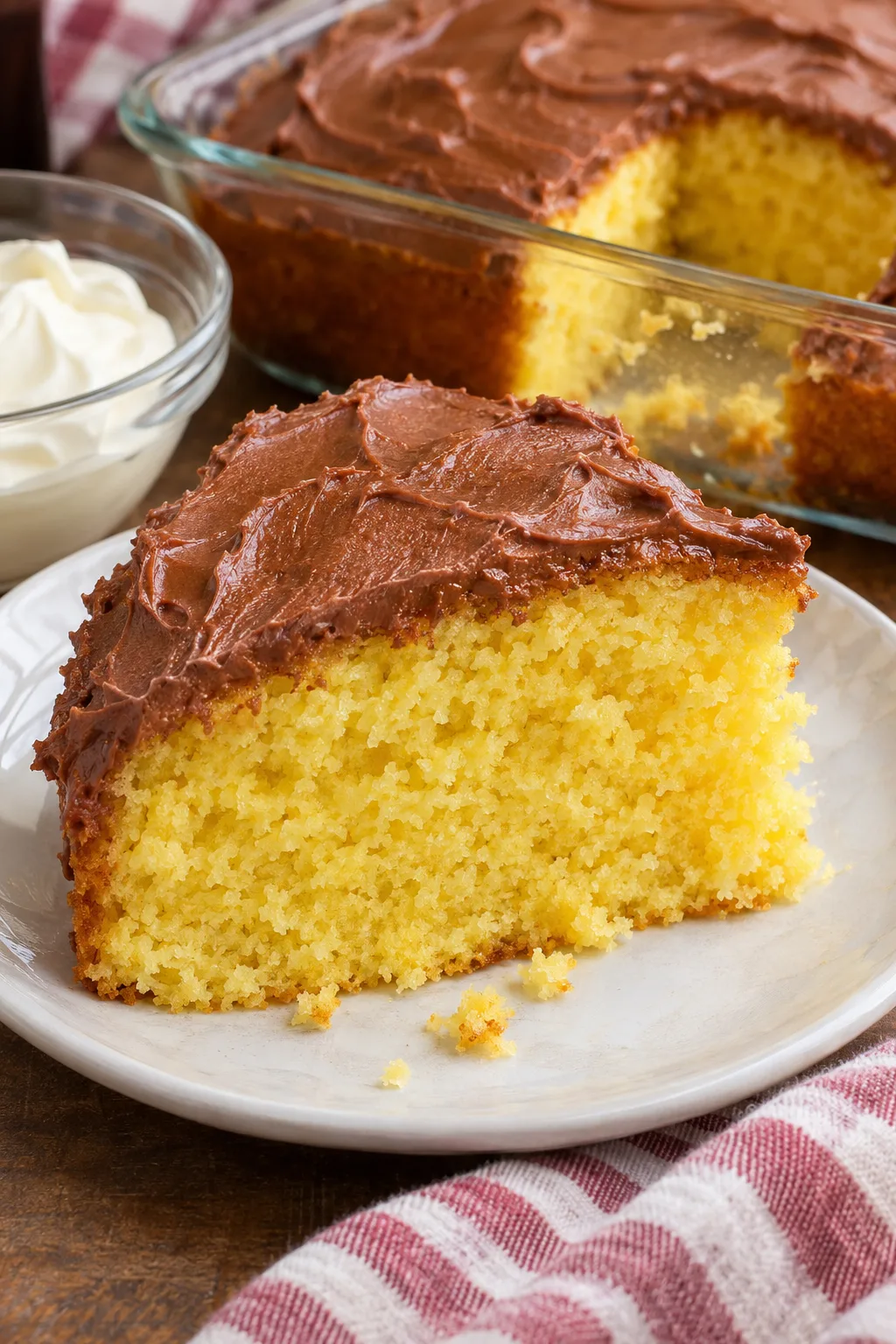
The cake rose beautifully. Not wildly high like an airy sponge, but evenly and confidently, with a soft golden top and no sunken center. The edges had just started to pull away from the pan by a hair, and the whole kitchen smelled buttery and vanilla-rich, even though there was no butter in the batter itself.
When I cut into it after cooling for about 35 minutes, the crumb was the real surprise. It was tight but tender, velvety instead of fluffy, and far more substantial than a standard box cake. It looked like the sort of cake you’d expect from a scratch recipe served on a glass pedestal at a family reunion.
7. The texture was the biggest improvement
If I had to sum up the result in one word, it would be plush. That cake had a soft, fine crumb that held together cleanly when sliced. No crumbling mess, no dry corners, no gummy streaks. It was moist all the way through, especially in the center, where boxed cakes sometimes bake up a little dry if you aren’t watching them.
Sour cream does that because it brings both fat and acidity. The fat softens the crumb, and the acidity can help weaken gluten formation just enough to keep the cake tender. In plain kitchen language, it helps the cake stay soft instead of coarse. You could taste that difference in every bite.
8. The flavor changed more than I expected
This wasn’t a sour cake, and nobody at my table would have guessed “sour cream” on the first bite. What it did have was a fuller, rounder flavor. The vanilla came through better, the yellow cake tasted more buttery even without added butter, and the sweetness felt less sharp.
That’s something I appreciate as I’ve gotten older. I still love dessert, but I don’t want every cake to taste like straight sugar. The sour cream mellowed the sweetness and gave the cake a homemade flavor that reminded me of the old sour cream coffee cakes ladies used to carry into potlucks in 9-by-13 pans wrapped in dish towels.
9. A few cautions before you try it
This swap works best when you make a small adjustment for thickness. Sour cream is not a one-to-one stand-in for water in the way milk sometimes can be. If your batter looks too stiff to spread easily, add 1/4 cup milk, then another tablespoon or two as needed. You want a thick but workable batter.
I would also strongly recommend using full-fat sour cream rather than fat-free. Full-fat gives the best texture and flavor. Reduced-fat can work in a pinch, but the cake may not be quite as rich. And if your box mix already calls for extra pudding or is labeled “super moist,” keep a close eye on bake time, because richer mixes can need a few extra minutes in the oven.
10. The best frostings and toppings for this version
Because the cake itself turns out richer, I like to pair it with something simple. A basic chocolate frosting is lovely, especially if you spread it on while the cake is just barely warm so it settles into the top. For a 9-by-13 cake, about 2 cups of frosting is plenty.
If you want something lighter, dust it with powdered sugar or top it with fresh strawberries and a spoonful of whipped cream. A cooked caramel icing would be mighty good too. In my house, this cake was especially nice with a vanilla buttercream made from 1/2 cup softened butter, 3 cups powdered sugar, 2 to 3 tablespoons milk, and 1 teaspoon vanilla.
11. How it held up the next day
Some cakes behave beautifully the first day and then dry out overnight. This one did not. I covered the cooled pan tightly and left it on the counter, and the next afternoon it was still moist and tender. In fact, I’d say the texture was even better after the flavors settled for 12 to 18 hours.
That makes this a fine choice for make-ahead baking. If you need a cake for a birthday supper, a church social, or grandkids coming over after school, you can bake it the day before without worry. Properly covered, it should stay good at room temperature for about 2 days, or in the refrigerator up to 5 days.
12. Ways to adapt the same idea
Once I saw how well this worked in yellow cake, my mind went straight to other flavors. White cake mix, butter cake mix, spice cake, and even chocolate cake mix all benefit from sour cream. For chocolate, I often use 8 ounces sour cream plus 1/4 cup brewed coffee or milk to loosen the batter and deepen the flavor.
You can also turn this into cupcakes. Fill lined muffin cups about 2/3 full and bake at 350 degrees Fahrenheit for 18 to 22 minutes. In a Bundt pan, expect more like 40 to 50 minutes depending on the pan size and your oven. Just grease every curve and corner well, because a richer batter likes to cling.
13. The science in plain English
I’m no laboratory woman, but after decades of baking, you learn what ingredients do by feel as much as by formula. Sour cream contains fat, moisture, and acid. Together, those help create a cake that is moist, tender, and flavorful. The thickness of the sour cream also supports a denser, finer crumb rather than a loose, airy one.
That means this trick is ideal when you want a boxed cake to taste less like a box and more like something mixed from a recipe card with splatters on it. It won’t turn cake mix into a wedding bakery layer all by itself, but it does move it a good step closer to homemade.
14. My honest verdict
Yes, it worked, and I would absolutely do it again. The cake that came out of my oven after 45 minutes was richer, moister, and more satisfying than the standard water version. It had better keeping quality, better flavor, and a texture that felt more thoughtful and old-fashioned.
If you’re standing in your kitchen with a yellow cake mix and a tub of sour cream, don’t be afraid of the experiment. Use the sour cream, add a little milk as needed, and bake until the center tests done. Sometimes the smallest changes are the ones that make folks ask for the recipe, and this is one of them.