I’ve boiled more heads of cabbage in my life than I could ever count, from big kettles for church suppers to smaller pots for a weeknight meal when the garden was generous and the weather turned crisp. So when I hear kitchen talk about adding baking soda to cabbage water, I understand the curiosity. It sounds like one of those thrifty old tricks passed from one cook to another over enamel bowls and handwritten recipe cards. One day, I tried it myself on purpose, just to watch closely and see what really happened after 15 minutes.
What I found was a lesson in how one tiny pantry ingredient can change color, texture, smell, and even flavor faster than you might expect. If you’ve ever wondered whether baking soda makes cabbage better, greener, softer, or simply ruined, I’ll walk you through exactly what happened in my pot, why it happened, and what I’d do instead if I wanted tender cabbage that still tastes like cabbage ought to taste.
1. I started with a very ordinary pot of cabbage
I used half a medium green cabbage, right around 1 1/2 pounds before trimming, and cut it into rough 1-inch strips. I brought 2 quarts of water to a rolling boil in a 4-quart pot, then added 1 teaspoon of kosher salt. Once the cabbage went in, the water settled down for a minute or two before coming back to a steady boil.
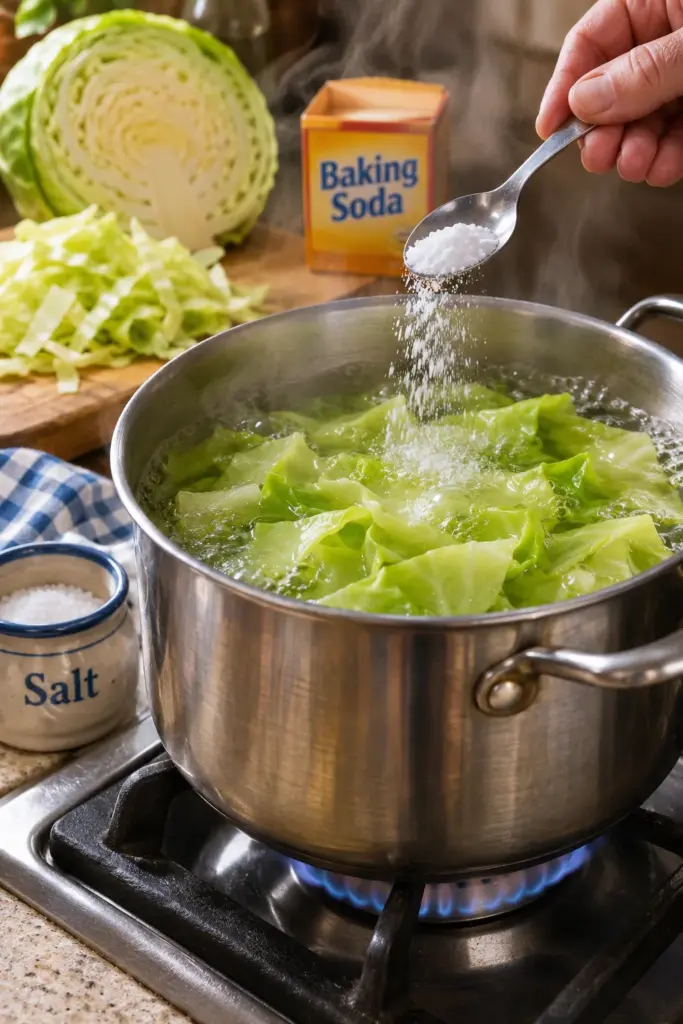
For the baking soda, I added a small amount on purpose: 1/4 teaspoon. That may not sound like much, but baking soda is powerful in a pot of vegetables. I stirred once, put the lid partly on, and let it boil for 15 minutes while I kept an eye on the color and the smell.
2. The cabbage turned brighter green almost right away
The first thing I noticed was the color. Within 2 to 3 minutes, the cabbage looked brighter and more vivid than cabbage usually does in plain salted water. It had that almost exaggerated green look that can fool a cook into thinking something wonderful is happening.
There’s a simple reason for that. Baking soda makes the water alkaline, and green vegetables often hold onto or intensify their chlorophyll color in alkaline conditions. At first glance, it can look like a success. If all you cared about was a greener pot, you might think you’d found a smart kitchen shortcut.
3. By the 10-minute mark, the texture was already changing too much
At about 10 minutes, I fished out a strip with a fork and pressed it against the side of the pot. It gave way much faster than cabbage normally would. Instead of tender-crisp or softly wilted, it was heading toward limp.
Cabbage has structure from pectin and other components in its cell walls. In alkaline water, those structures break down faster. That means the baking soda didn’t just help the cabbage cook. It made it cook past its best point in a hurry. By the full 15 minutes, some of the thinner pieces had gone from tender to downright mushy.
4. After 15 minutes, the cabbage was soft, dull in flavor, and nearly waterlogged
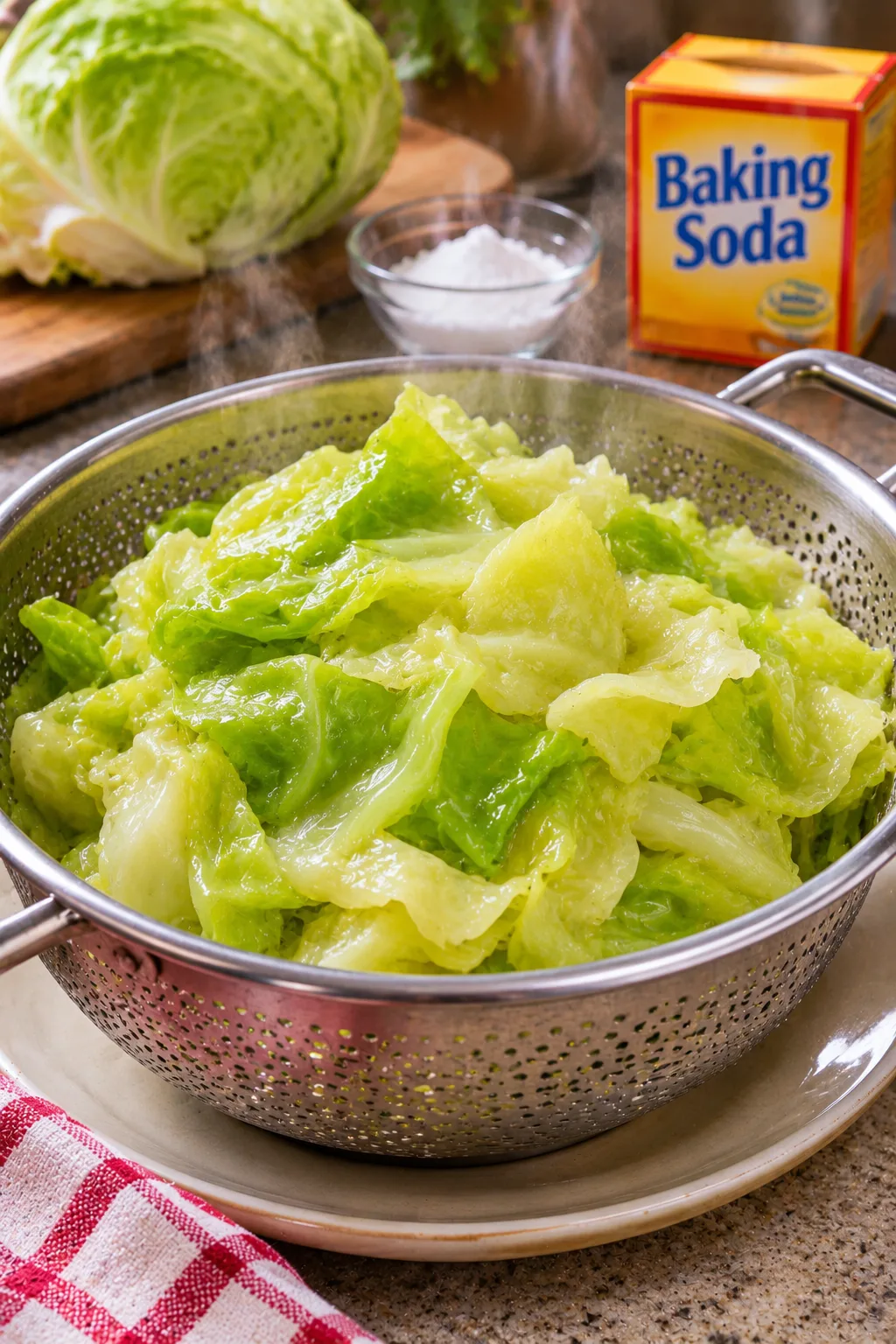
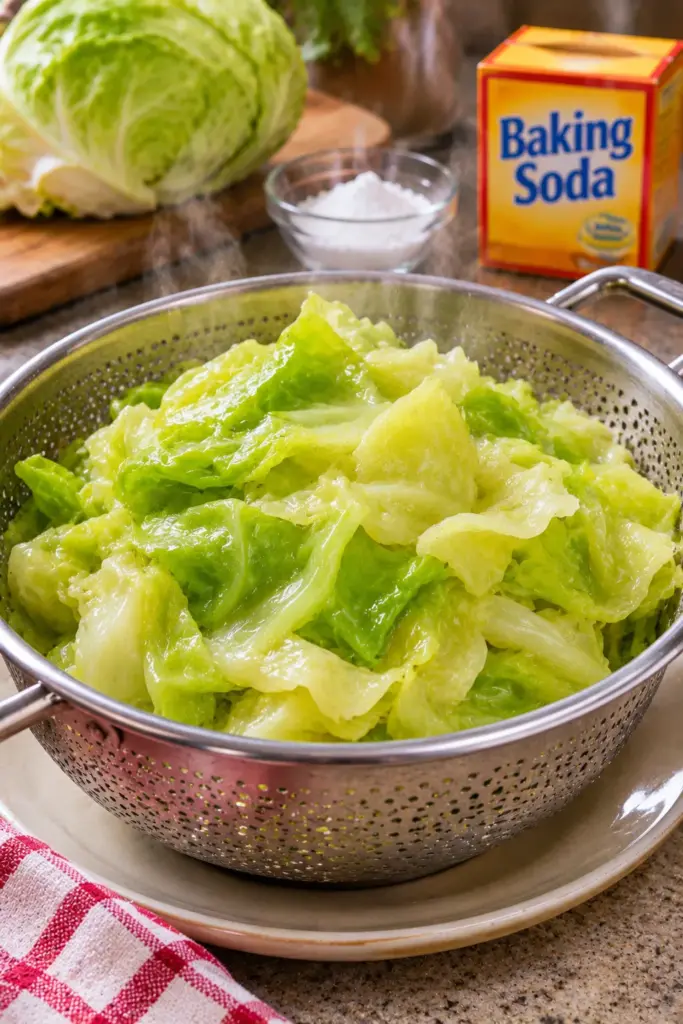
When I drained it, the cabbage had a strangely split personality. The color was still bright enough to catch the eye, but the leaves were overly soft and a bit slippery. The thicker ribs held some shape, but the leafy sections had collapsed more than I wanted.
When I tasted it, the flavor was the bigger disappointment. It no longer had that gentle sweetness cabbage gets when cooked properly. Instead, it tasted flat and washed out, as if the life had been boiled right out of it. The texture and flavor didn’t match that cheerful green color one bit.
5. The smell in the kitchen grew stronger, not gentler
Now this part surprised some folks when I told them, because one old belief is that baking soda helps tame cabbage odor. In my kitchen, it did not improve matters. If anything, by the end of the 15 minutes, the sulfur smell was stronger and less pleasant.
Cabbage, like broccoli, Brussels sprouts, and cauliflower, is part of the brassica family. When overcooked, those vegetables release more sulfur compounds. Since the baking soda sped up the breakdown of the cabbage, it pushed the pot closer to that overcooked stage. The result was a smell that lingered longer than I cared for, especially in a closed-up farmhouse kitchen.
6. The cooking liquid looked cloudy and carried that cooked-cabbage smell
Once I poured the pot through a colander, I noticed the water had gone quite cloudy. That’s another sign that the cabbage had broken down more than usual. Tiny bits had come off the leaves, and some of the good flavor had gone into the water instead of staying in the vegetable.
My mother always said, “If the pot smells stronger than the plate tastes, you’ve cooked it too long.” I think of that often with cabbage. In this case, the pot gave away the ending before the taste test did. A cloudy pot and a strong odor usually mean your cabbage has already crossed the line.
7. Why baking soda does this to cabbage
The science is plain enough, even if our grandmothers didn’t call it science. Baking soda raises the pH of the water. In alkaline water, chlorophyll stays greener, but the vegetable’s cell walls weaken faster. That’s why the cabbage looked lively while feeling tired.
This is one of those kitchen trade-offs that isn’t worth it for me. You gain appearance for a short while, but you lose texture and flavor. A vegetable can be pretty in the pot and disappointing on the fork. I’d much rather have cabbage that is pale green and sweet-tender than bright green and mushy.
8. It can also reduce some of the cabbage’s nutritional value
I’m no scold about food needing to be perfect, but it’s worth knowing that alkaline cooking can damage certain nutrients, especially vitamin C and some B vitamins. Cabbage is one of those humble vegetables that gives you a good deal nutritionally for very little money, so I hate to waste that.
If you’re feeding a family and stretching a grocery budget, every bit matters. A 2-pound head of cabbage can become slaw, soup, skillet dinners, or a side dish for under a few dollars in many places. I want the most taste and goodness out of it, and baking soda simply doesn’t help with that.
9. The amount matters, but even a little can push the cabbage too far
I only used 1/4 teaspoon in 2 quarts of water, and that was enough to make a noticeable difference. If someone were to use 1/2 teaspoon or a full teaspoon, the breakdown would be even stronger, especially over 15 minutes or longer.
That’s the danger with old kitchen tricks: the measurements were often vague. “A pinch” in one hand can be far more than “a pinch” in another. In a modern kitchen, where we can be more precise, it becomes very clear that even small amounts of baking soda can change a pot of cabbage more than most people expect.
10. If you want tender cabbage, there are better ways to get it
For boiled cabbage that still has flavor, I use 2 quarts of water for about 1 1/2 pounds of sliced cabbage, 1 to 1 1/2 teaspoons of salt, and I cook it uncovered or partially covered for 6 to 8 minutes for softer ribbons, or 4 to 5 minutes if I plan to finish it in butter afterward.
Then I drain it well and toss it with 1 to 2 tablespoons of butter, a little black pepper, and sometimes 1 teaspoon of cider vinegar. If I want it richer, I’ll add a spoonful of bacon drippings. That gives me tenderness without turning the cabbage limp and bland.
11. My favorite method is to braise instead of boil
If you ask me how cabbage tastes best, I’ll nearly always say braised. I melt 2 tablespoons of butter in a deep skillet, add half a sliced onion, then pile in 6 to 8 cups of shredded cabbage. I season with 3/4 teaspoon salt, a few grinds of pepper, and pour in 1/2 cup chicken broth or water.
I cover it and cook on low for 15 to 20 minutes, stirring once or twice. The cabbage softens gently, the sweetness comes through, and the liquid turns into a bit of savory glaze instead of a whole pot of discarded water. Sometimes I add a small apple, sliced thin, or 1 tablespoon of apple cider vinegar at the end. That kind of cabbage can sit beside sausage, ham, or mashed potatoes and make a whole supper feel complete.
12. If your goal is better color, use time and temperature instead of baking soda
To keep cabbage from looking drab, the best tools are quick cooking and plenty of boiling water. Don’t crowd a little saucepan with a whole head of cabbage. Use a broad pot, get the water fully boiling first, and cook only until tender.
You can also shock wedges or leaves briefly in cold water if you’re preparing them ahead for stuffed cabbage. That stops the cooking and helps preserve the color better than letting them sit steaming in a colander. Good timing does more for vegetables than pantry chemistry ever will.
13. A little acid at the end brightens flavor far better than soda at the start
This is one of those lessons I learned by cooking beside older women who never wrote much down. Cabbage loves a finishing touch of acid. A teaspoon or two of cider vinegar, a squeeze of lemon, or even a little pickle brine can wake it right up.
The trick is to add that acid after the cabbage is tender, not before if you want it to soften easily. Acid can slow softening at the start, while baking soda softens too fast. So I cook the cabbage first, then season it to taste. That way I keep control of the texture.
14. When baking soda can make sense in the kitchen, and when it does not
I’m not against baking soda altogether. It has its place. A pinch can help dried beans soften in some cases, and it’s useful in certain baked goods where you need lift and browning. But vegetables like cabbage are not where I reach for it.
Over the years, I’ve found that many “miracle” shortcuts solve one little problem by creating two bigger ones. With cabbage, baking soda may give you greener color, but the cost is mushy texture, stronger odor, and weaker flavor. That’s too high a price for me.
15. So what happened 15 minutes later?
Fifteen minutes after I dropped baking soda into my boiling cabbage, I had a pot of cabbage that looked brighter than usual but tasted worse. It had softened too much, smelled stronger, and lost the sweet, earthy character that makes cabbage such a fine old-fashioned side dish.
If you’ve been tempted to try this trick, now you know what to expect. My honest advice is simple: skip the baking soda, cook the cabbage a little less, season it well, and let the vegetable speak for itself. In my kitchen, that’s the difference between something folks merely eat and something they go back for with a second spoonful.