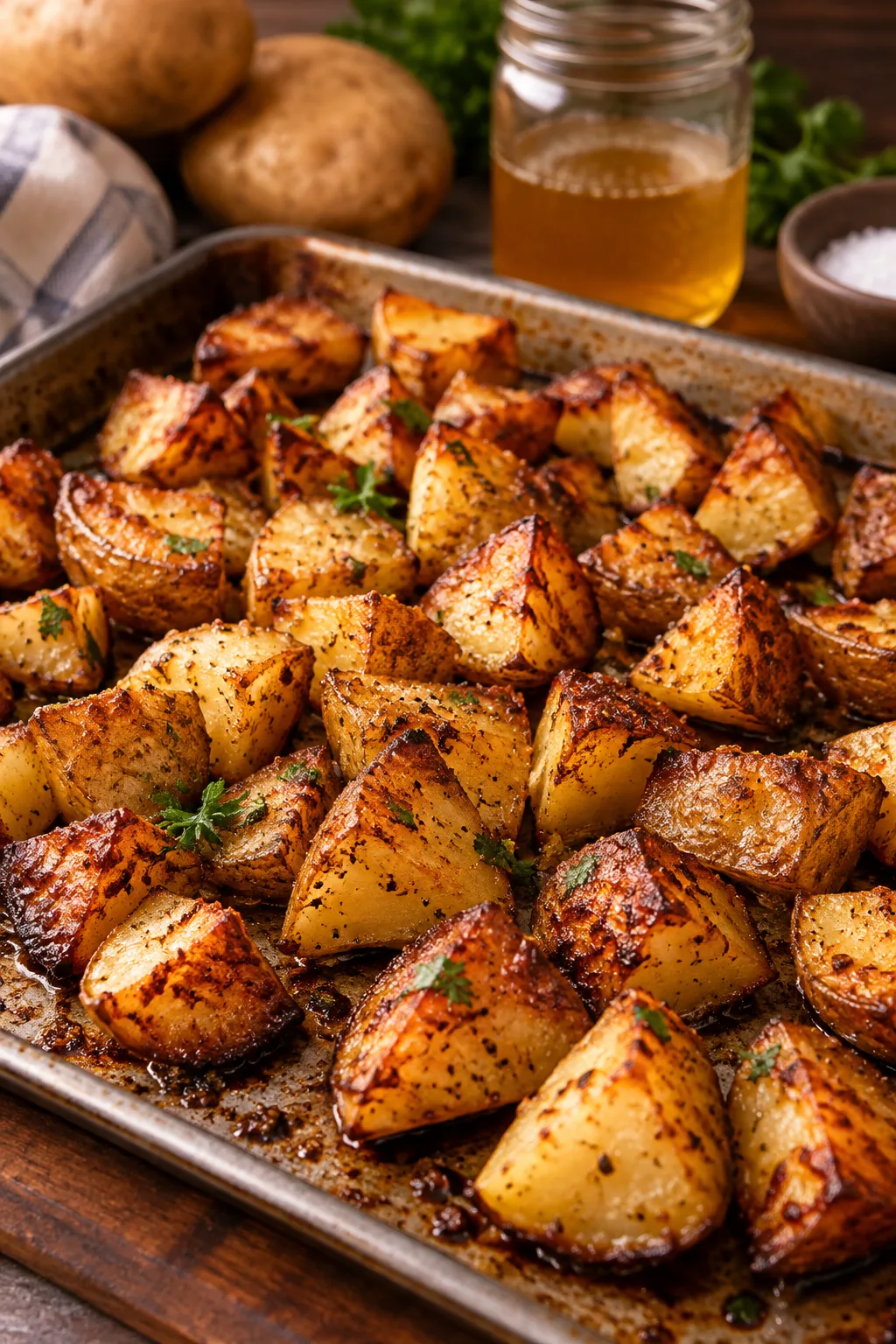
I’ll admit it: this whole thing started because I had bacon grease sitting in my fridge and absolutely no desire to waste it.
You know those little jars of bacon fat people’s grandparents always seemed to keep near the stove? Well, I had about 3 tablespoons left from a weekend breakfast, plus a bag of russet potatoes staring at me from the pantry.
Dinner needed to happen fast.
So instead of grabbing my usual olive oil, I coated my raw potatoes in bacon grease, tossed them on a hot sheet pan, and roasted them for 45 minutes.
Honestly, I expected decent potatoes.
What I got were potatoes with deeply browned edges, fluffy centers, little crispy corners, and a smoky, savory flavor that made it pretty hard to stop picking pieces straight off the pan.
And yes, I burned my fingers doing that.
Worth it.
If you’ve been wondering whether roasting potatoes in bacon grease actually makes a difference, here’s exactly what happened in my kitchen and how you can make them at home.
Why Roast Potatoes in Bacon Grease?
Roasted potatoes already have a lot going for them.
They’re cheap, comforting, easy to season, and they work with breakfast, lunch, or dinner. Still, the cooking fat makes a bigger difference than many people realize.
Olive oil gives roasted potatoes a clean, rich flavor. Bacon grease brings something different.
It adds smoky flavor, salty richness, and a deeper savory taste before the potatoes even hit the oven.
That doesn’t mean your potatoes will taste like a strip of bacon.
They won’t.
Instead, the bacon fat gives them the kind of flavor you might expect from really good diner breakfast potatoes. It’s rich without being overwhelming, especially when you stick with a sensible amount.
For 2 pounds of potatoes, I found that 3 tablespoons was plenty.
The Ingredients I Used
I kept this roasted potato recipe super simple because I wanted to see what the bacon grease itself could do.
Here’s what went on my sheet pan:
- 2 pounds russet potatoes
- 3 tablespoons bacon grease
- 1 teaspoon kosher salt
- 1/2 teaspoon black pepper
- 1/2 teaspoon garlic powder
That’s it.
No fancy spice blend. No fresh herbs. No complicated prep.
Sometimes simple food tells you more.
Russet potatoes worked especially well because they have a fluffy, starchy center. Once roasted, that soft inside contrasts beautifully with the crisp exterior.
How I Prepared the Raw Potatoes
First, I scrubbed four medium-large russet potatoes.
I left the skins on because, honestly, peeling potatoes on a weeknight feels like paperwork.
Plus, the skins get tasty in the oven.
I cut each potato into chunks roughly 1 1/4 inches wide. They weren’t perfectly identical because this was dinner, not a geometry exam, but I tried to keep them fairly close in size.
That matters.
Tiny potato pieces can burn before the bigger ones finish cooking. Huge chunks may still be firm inside after everything else is beautifully browned.
About 1 to 1 1/4 inches worked well for the 45-minute roasting time.
I Melted the Bacon Grease Before Coating the Potatoes
If you store bacon grease in the refrigerator, it usually becomes firm.
Mine was soft but not completely liquid.
You want the bacon fat warm enough to coat the potatoes evenly.
If needed, warm it for about 10 to 15 seconds in the microwave. You’re not trying to make it piping hot. You just want it loose enough to drizzle and toss.
I poured the bacon grease over the raw potato chunks, added the salt, pepper, and garlic powder, then tossed everything really well.
And I mean really well.
Give it a good 30 to 60 seconds.
Every potato should have a thin coating of fat and seasoning.
You don’t want one potato swimming in bacon grease while another one looks bone dry.
I Roasted the Potatoes at 425°F
I set my oven to 425°F.
For me, that temperature hits a nice middle ground.
It’s hot enough to create crisp, browned potato edges, but it doesn’t cook the outside so aggressively that the centers struggle to catch up.
I also slipped my metal sheet pan into the oven for about 5 minutes while everything heated.
This step is small, but I really like it.
When the bacon-coated potatoes hit the hot pan, they started cooking immediately.
You can actually hear that little sizzle.
And, well, that’s a pretty good sign.
Give the Potatoes Plenty of Space
Once the sheet pan was hot, I carefully spread the potatoes across it in one layer.
This part matters more than it seems.
If roasted potatoes are packed together tightly, moisture collects around them.
Then they steam.
And steamed potatoes are fine, sure, but they’re not what we’re chasing here.
We want those browned bottoms and crunchy little edges.
I left a bit of breathing room between the potato pieces so hot air could move around them.
If your pan looks overcrowded, use two pans.
Seriously.
A little extra dishwashing is better than a tray of pale, soft potatoes.
What Happened After About 22 Minutes
At around the halfway point, I pulled out the sheet pan and flipped the potatoes with a thin metal spatula.
This was when I started getting excited.
The bottoms were already deeply golden.
Several pieces had developed rough, crispy ridges around their edges, almost like the crunchy bits on good diner hash browns.
And the smell?
Oh man.
The kitchen smelled smoky, savory, warm, and way more impressive than a tray of potatoes had any business smelling.
The bacon aroma wasn’t aggressive.
It was more like a background note that made the whole pan smell richer.
I flipped the pieces, spread them back out, and returned the pan to the oven.
What the Potatoes Looked Like After 45 Minutes
At 45 minutes, I pulled the sheet pan out.
That’s when the experiment officially became something I knew I’d make again.
The potatoes were dark golden around the edges.
Some corners had an almost blistered appearance. The flat sides that had stayed in contact with the pan had developed a firm, browned crust.
Then I split one open.
The inside was steaming, fluffy, and soft.
That contrast is what made these potatoes so darn good.
You get crunch first, then that soft baked-potato-like middle.
Russets absolutely shine here.
Did Bacon Grease Make the Potatoes Crispier?
In my batch, yes.
The texture was actually the part that surprised me most.
I expected the bacon grease to add more flavor, but I wasn’t expecting such noticeable browning.
The potatoes developed lots of crunchy edges and browned flat surfaces.
They looked darker and more deeply roasted than the olive-oil potatoes I normally make using a similar method.
That doesn’t mean olive oil can’t produce crispy roasted potatoes.
Of course it can.
But bacon grease gave this batch a slightly different crust and a richer roasted character.
What Do Bacon Grease Roasted Potatoes Taste Like?
Here’s the interesting part.
They don’t taste overwhelmingly like bacon.
Instead, the bacon grease gives the potatoes a salty, smoky, meaty background flavor.
Think good breakfast potatoes at a local diner.
You know the kind.
Crispy outside, tender middle, flavorful enough that you keep eating them even after you said you were full.
That’s the vibe.
The garlic powder worked really well too because it added flavor without covering the bacon fat.
A little black pepper gave everything just enough bite.
Don’t Use Too Much Bacon Grease
This may be the biggest mistake people can make with bacon grease roasted potatoes.
More fat does not automatically mean more crispiness.
Too much grease can leave your potatoes heavy and oily.
For 2 pounds of potatoes, 3 tablespoons gave me enough to coat the pieces lightly without leaving a puddle on the pan.
If you pour in 5 or 6 tablespoons, especially on a crowded sheet pan, the potatoes may end up sitting in fat instead of roasting properly.
The goal is a thin coating.
Not a swimming pool.
Don’t Forget the Salt
Bacon grease does contain salty flavor, but potatoes still need seasoning.
I used 1 teaspoon kosher salt for 2 pounds of potatoes.
That gave them enough seasoning without making them aggressively salty.
Different batches of bacon grease can taste different, though.
Some bacon is saltier than others.
So when the potatoes come out of the oven, taste one before adding more salt.
That tiny habit saves dinner more often than people admit.
Russet Potatoes Are Great for This Method
I’d use russets again without hesitation.
Their high starch content gives you that fluffy center people love in baked potatoes.
When roasted in bacon grease, the outside gets crisp while the middle stays light and soft.
That contrast is fantastic.
If you want crispy roasted potatoes with almost fluffy mashed-potato texture inside, russets are a great pick.
Can You Use Yukon Gold Potatoes?
Absolutely.
Yukon Gold potatoes will give you a different result, though.
Their centers tend to stay creamy and buttery rather than airy and fluffy.
They still brown well and pair beautifully with bacon fat.
So if you prefer creamy roasted potatoes, Yukon Golds might actually be your favorite.
Just cut them into similar-sized chunks so they cook evenly.
What About Red Potatoes?
Red potatoes can work too.
They have a waxier texture, which means the centers stay firmer after roasting.
They won’t give you quite the same fluffy interior as russets.
Still tasty, just different.
For small red potatoes, I’d cut them in halves or quarters depending on size and start checking around 35 to 40 minutes.
Want Extra Crispy Potatoes? Parboil Them First
Now, this is where things can get a little ridiculous—in a good way.
If you have an extra 10 minutes, parboil your potatoes before roasting.
Place the cut potatoes in salted water and boil them for roughly 5 to 7 minutes.
You don’t want them fully cooked.
You just want the outside edges starting to soften.
Drain them, then let them sit for a couple minutes so excess steam can escape.
Give the potatoes a gentle shake in the pot or colander.
The surfaces become slightly rough.
Those rough edges turn into crunchy bits in the oven.
Then coat the potatoes with bacon grease and seasonings before roasting at 425°F.
More work?
Yep.
Worth doing for Sunday brunch or a holiday meal?
Also yep.
Easy Seasonings for Bacon Grease Roasted Potatoes
The basic salt, pepper, and garlic version is great on its own.
Still, these potatoes can handle plenty of other flavors.
Try adding 1/2 teaspoon smoked paprika for more smoky flavor.
A little onion powder also works beautifully.
Fresh rosemary gives the potatoes a cozy Sunday-dinner taste. Use about 1 teaspoon finely chopped fresh rosemary.
If you’re using dried rosemary, use less since the flavor is stronger.
Thyme also works nicely.
Just don’t throw every spice in your cabinet onto the potatoes at once.
Bacon grease already has character.
Let it have some room.
Add Sweet Ingredients After Roasting
If you’re thinking about adding maple flavor, be careful.
Sweet ingredients can burn quickly in a 425°F oven.
Brown sugar, maple seasoning, and sugary sauces may darken before the potatoes finish cooking.
Instead, roast the potatoes first.
Then add a tiny drizzle of maple syrup after they come out.
Sweet, salty, smoky potatoes?
Yeah, that can disappear pretty fast at brunch.
What to Serve With Bacon Grease Roasted Potatoes
These potatoes can fit into almost any casual meal.
For breakfast, serve them with:
- Scrambled eggs
- Fried eggs
- Breakfast sausage
- Omelets
- Fresh fruit
- Toast
For dinner, try them with:
- Roasted chicken thighs
- Pork chops
- Grilled burgers
- Salmon
- Sausage
- Meatloaf
I also like adding something green to the plate.
Roasted broccoli, green beans, Brussels sprouts, or a crisp salad balances the richness nicely.
And if you have sour cream or plain Greek yogurt sitting around, put a spoonful on the side.
The cool, tangy cream against those hot crispy potatoes?
Good stuff.
How to Make This Dinner Faster
Busy night?
I get it.
Cut your potato pieces slightly smaller, around 1 inch, and they may cook a little faster.
Just keep an eye on the edges because smaller pieces brown sooner.
You can also prep your potatoes earlier in the day.
Cut them, cover them with cold water, and keep them in the refrigerator.
When you’re rea