You put a beautiful meatloaf in the oven, dinner is starting to smell amazing, and then you check on it.
Wait a second.
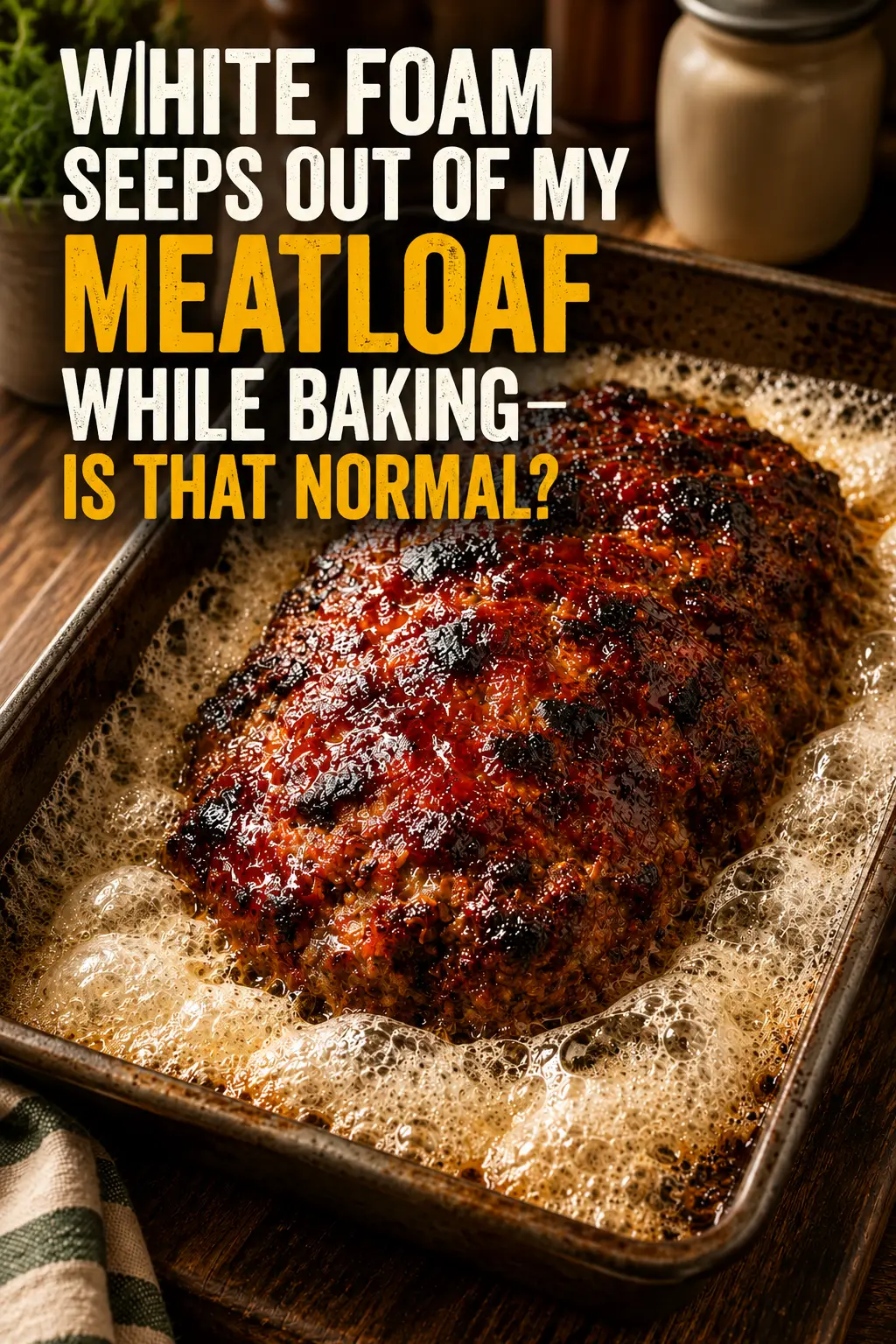
What is that weird white stuff bubbling out of the meat?
I’ll admit, it isn’t exactly appetizing. The first time you notice white or pale gray foam around a meatloaf, it can look like something has gone seriously wrong. You may even wonder whether the ground beef was spoiled.
Fortunately, white foam that appears while meatloaf cooks is usually normal. In most cases, it comes from proteins and moisture released from the meat as it heats.
So, no, your meatloaf isn’t automatically ruined.
Here’s why that strange white substance appears, what you can do about it, and the signs that actually matter when deciding whether meatloaf is safe to eat.
What Is the White Stuff Coming Out of Meatloaf?
That pale substance is generally a mixture of water, meat proteins, and fat released during cooking.
Ground meat contains plenty of moisture and protein. As your meatloaf heats up, proteins change structure and moisture gets pushed out.
Some of those proteins can collect on the surface and turn pale as they cook.
The result may look like:
- White foam
- Grayish bubbles
- Pale liquid
- Small white clumps
- A light-colored coating around the edges
It isn’t pretty, but appearance alone doesn’t mean anything went wrong.
Why Does Meat Release White Protein When It Cooks?
Think about what happens when you cook an egg.
The clear egg white becomes solid and white because heat changes its proteins.
Meat proteins also change when heated.
As moisture escapes from your meatloaf, dissolved proteins can travel with it. Once those proteins cook, they may become visible as pale foam or solid material.
You can see similar effects when cooking burgers, chicken, fish, and other protein-rich foods.
So that strange stuff isn’t some mystery ingredient suddenly appearing in your oven.
It was already part of the meat.
Does White Foam Mean the Ground Beef Is Bad?
Not by itself.
White foam appearing during cooking is not a reliable sign that ground beef has spoiled.
Food safety depends much more on how the raw meat was stored and handled before cooking, along with whether the finished meatloaf reaches a safe internal temperature.
If the raw ground meat had a strong unpleasant odor, was stored improperly, or showed clear signs of spoilage before you cooked it, that’s a separate concern.
But normal-looking meat that releases pale foam during baking isn’t automatically bad.
Why Does My Meatloaf Produce So Much Liquid?
Now this is where the recipe can make a difference.
Some meatloaves release far more liquid than others.
Possible reasons include:
- Higher-fat ground meat
- Lots of milk
- Watery vegetables
- Too many eggs
- Excess sauce in the mixture
- Frozen ingredients that release water
- Meat packed tightly into a loaf pan
Onions, mushrooms, peppers, and other vegetables can contribute moisture too.
None of that necessarily ruins the meatloaf, but too much liquid can leave it sitting in a little swimming pool of fat and juices.
Not exactly the crispy-edged masterpiece we had in mind.
Does Fat Content Affect the White Foam?
It can affect the amount of liquid released.
Ground beef with more fat naturally renders more fat as it cooks.
That rendered fat can mix with water and cooked proteins around the meatloaf, making the liquid look cloudy, pale, or foamy.
Using leaner meat can reduce some of the grease, although extremely lean meat may produce a drier loaf.
There’s a happy middle ground.
For many home cooks, ground beef around 80% to 90% lean provides a good balance between moisture and richness, depending on the recipe.
Why a Loaf Pan Can Make the Problem Look Worse
I know the loaf pan seems like the obvious place to cook meatloaf.
It’s called meat-loaf, after all.
But a traditional loaf pan holds the meat tightly and traps rendered juices around it.
That can make white protein deposits and greasy liquid much more noticeable.
Instead, try shaping the meatloaf by hand and baking it on a rimmed sheet pan or roasting pan.
The exposed sides can brown better, and the loaf isn’t sitting in as much rendered liquid.
Honestly, once I started thinking of meatloaf as a giant free-form meatball instead of something that absolutely needed a bread pan, the whole process made more sense.
How to Reduce White Foam on Meatloaf
You may not be able to prevent it completely, and you don’t really need to.
Still, a few cooking choices can reduce excess moisture.
Don’t Overwork the Meat
Mix the ingredients until everything is combined, then stop.
Overworking ground meat can give meatloaf a dense, tight texture.
Use your hands gently rather than squeezing the mixture like you’re trying to settle a personal argument with dinner.
Watch Your Wet Ingredients
Milk, eggs, ketchup, Worcestershire sauce, and other liquids all have jobs in a meatloaf recipe.
But adding significantly more liquid than the recipe needs can contribute to excess moisture.
Measure first. Improvise later.
Cook Watery Vegetables First
Raw onions, mushrooms, zucchini, peppers, and similar vegetables release water as they cook.
Sautéing particularly watery vegetables before adding them to the meat mixture can remove some excess moisture while adding flavor.
Let them cool before mixing them into raw meat.
Don’t Pack the Loaf Too Tightly
Shape the mixture firmly enough to hold together but don’t compress it excessively.
A tightly packed meatloaf can become dense rather than tender.
Try a Free-Form Meatloaf
Shape the meat mixture into a loaf on a rimmed baking sheet.
You’ll get more exposed surface area, which means more browned edges.
And, come on, those sticky glazed edges are half the reason we’re making meatloaf in the first place.
Should You Scoop the White Stuff Off?
You can if the appearance bothers you.
If pale protein collects around the loaf during baking, carefully spooning away excess liquid is fine.
You can also remove visible residue before serving.
But you don’t need to panic and throw the entire dinner away because you spotted some white foam.
Focus instead on proper cooking temperature.
That’s what matters for safety.
What Temperature Should Meatloaf Reach?
This is the number worth remembering.
For meatloaf made with ground beef, pork, veal, or lamb, cook the center to at least 160°F (71°C).
For meatloaf containing ground chicken or turkey, the safe minimum internal temperature is 165°F (74°C).
Use a food thermometer and insert it into the thickest part of the loaf.
Don’t judge doneness based only on color.
Ground meat can change color before or after it reaches a safe temperature, so a thermometer gives you much better information.
Why a Meat Thermometer Is Worth Having
I used to think thermometers were mostly for people cooking Thanksgiving turkeys the size of small children.
Nope.
A basic instant-read thermometer takes the guessing out of meatloaf, burgers, chicken, pork, and plenty of other everyday foods.
Instead of slicing your meatloaf open three times and staring at it suspiciously, check the temperature.
Done.
That little gadget can save dinner from being both undercooked and hopelessly overcooked.
Should Meatloaf Rest Before Slicing?
Absolutely.
Give your meatloaf about 10 minutes to rest after removing it from the oven.
The juices settle as the meat rests, making the loaf easier to slice.
Cut into it immediately and those juices may run all over the cutting board.
I know everybody’s hungry.
I know the mashed potatoes are sitting there.
Still, give the poor meatloaf a few minutes.
What If the Meatloaf Smells Strange?
White foam during cooking is one thing.
A clearly unpleasant odor is another.
If raw meat smelled sour, rotten, or otherwise abnormal before cooking, don’t rely on baking to fix the problem.
Likewise, discard raw meat that has been stored outside safe temperature limits.
Cooking spoiled or improperly stored food isn’t a reliable way to make it safe.
When the concern is actual spoilage rather than normal cooking proteins, playing it safe makes sense.
How Long Can Raw Ground Beef Stay in the Fridge?
Raw ground beef has a relatively short refrigerator life.
USDA guidance generally recommends using refrigerated raw ground beef within 1 to 2 days when kept at 40°F (4°C) or below.
If you won’t make the meatloaf within that period, freezing the ground beef is the better plan.
This is another reason I like labeling packages with dates.
Nobody enjoys playing “When exactly did we buy this?” with raw meat.
How Long Does Cooked Meatloaf Last?
Once dinner is over, refrigerate leftover meatloaf promptly.
Cooked meat leftovers are generally best used within 3 to 4 days when properly refrigerated.
Store slices in a covered container so they’re easy to grab for another meal.
And meatloaf leftovers are hardly a punishment.
A thick slice of cold meatloaf turned into a toasted sandwich the next day? Now we’re talking.
Can You Freeze Meatloaf?
Yep.
Meatloaf freezes well, which makes it a handy make-ahead dinner.
You can freeze cooked meatloaf in individual slices so you don’t have to thaw the entire loaf later.
Wrap portions well and place them in freezer-safe packaging.
Individual slices are perfect for quick dinners or sandwiches when cooking from scratch just isn’t happening.
Frequently Asked Questions
Why is white foam coming out of my meatloaf?
The white or grayish material is usually cooked protein mixed with moisture and fat released from the meat as it heats.
Is white stuff on cooked meatloaf safe?
White protein residue formed during normal cooking is generally not a sign of spoilage. Proper storage and reaching a safe internal temperature are more important safety factors.
Does white foam mean my meatloaf is undercooked?
Not necessarily. The appearance of foam doesn’t tell you whether the center is fully cooked. Check the internal temperature with a food thermometer.
What temperature should beef meatloaf reach?
Meatloaf made from ground beef should reach at least 160°F (71°C) in the center.
What temperature should turkey meatloaf reach?
Ground poultry should reach at least 165°F (74°C).
Why is my meatloaf swimming in grease?
Ground meat with a higher fat percentage, excess liquid ingredients, watery vegetables, and baking in a loaf pan can all contribute to liquid collecting around the meatloaf.
Is it better to bake meatloaf in a loaf pan or on a baking sheet?
Both methods work. A loaf pan creates a traditional shape but can trap rendered fat and liquid. A free-form loaf on a rimmed baking sheet allows more surface browning.
Can I remove the white foam while the meatloaf cooks?
Yes. You can carefully spoon away excess liquid or pale residue if desired, though it isn’t usually necessary.
Final Thoughts
Seeing white foam seep out of your meatloaf can look pretty gross, especially when you’ve never noticed it before.
But in most cases, it’s simply protein, moisture, and fat being released as the meat cooks.
It doesn’t automatically mean your ground beef was spoiled, and it doesn’t mean dinner needs to go in the trash.
Use fresh, properly stored meat, follow sensible cooking practices, and check the center with a food thermometer. Beef-based meatloaf should reach 160°F, while meatloaf containing ground poultry should reach 165°F.
Then let it rest, slice it up, pass the mashed potatoes, and forget about that weird white foam.
Dinner survived.