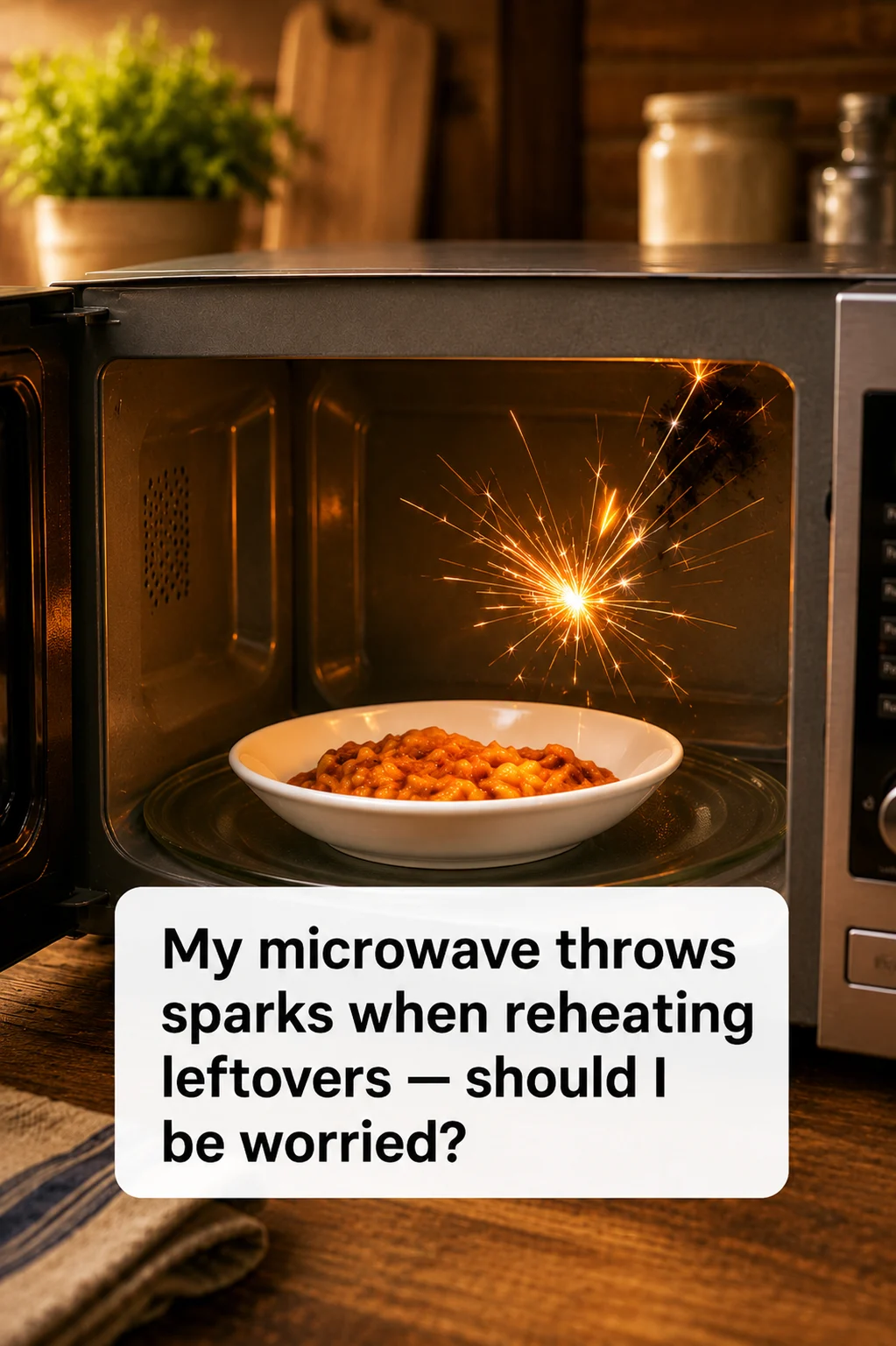
Have you ever popped last night’s leftovers into the microwave, pressed start, and suddenly noticed bright sparks flashing inside? It can be pretty alarming. I remember the first time it happened in my kitchen—I hit the stop button so fast I almost forgot about my dinner!
The good news is that a sparking microwave does not always mean it needs to be replaced. In many cases, the cause is simple and easy to fix. Still, it’s never something to ignore. Here’s what you need to know, why it happens, and what to do before using your microwave again.
Why Does a Microwave Spark?
Sparks, also called arcing, happen when electricity jumps between surfaces inside the microwave. This usually points to something that should not be there or a part that needs attention.
The most common causes include:
- Metal utensils left inside the microwave
- Aluminum foil touching the walls
- Plates or mugs with metallic trim
- Burned food splatters
- A damaged waveguide cover
- Chipped interior coating
- Worn-out internal parts
Finding the source early can help prevent bigger problems.
Check for Metal First
This is the easiest place to start.
Even a small piece of metal can create sparks. A forgotten spoon, a twist tie, or a container with a shiny decorative edge may trigger arcing.
Before reheating food, double-check that every dish is labeled as microwave-safe. Glass, ceramic, and microwave-safe plastic containers are usually the best choices.
Food Splatters Can Cause Problems
Let’s face it—most microwaves collect splashes of sauce, melted cheese, and bits of food over time.
When these leftovers become burned onto the interior walls, they can create hot spots that lead to sparking.
A quick cleaning with warm water, mild dish soap, and a soft cloth often solves the problem. Avoid harsh scrubbers that can damage the inside surface.
Inspect the Waveguide Cover
Many people don’t even know this part exists.
The waveguide cover is a small panel located on one side of the microwave’s interior. It protects important electrical components from grease and moisture.
If the cover looks burned, cracked, or has dark spots, it may be causing the sparks. Fortunately, replacement covers are available for many microwave models and are usually inexpensive.
Look for Chipped Paint or Burn Marks
Take a close look inside the microwave.
If you notice peeling paint or exposed metal, stop using the appliance until it’s repaired. Exposed metal creates the perfect place for electrical arcing to happen.
Small chips sometimes can be repaired with microwave cavity touch-up paint made for appliances, but larger damage may require professional service.
When Should You Stop Using the Microwave?
Some situations call for immediate action.
Stop using the microwave if you notice:
- Sparks that continue after cleaning
- A burning smell
- Smoke inside the oven
- Loud popping noises
- Burn marks getting larger
- Repeated sparking with microwave-safe dishes
These signs may point to an electrical issue that should be inspected before the microwave is used again.
Can You Fix a Sparking Microwave Yourself?
It depends on what’s causing the issue.
Simple problems like cleaning food residue or removing metal objects are safe for most homeowners.
However, repairs involving electrical parts, the magnetron, wiring, or high-voltage components should always be left to a qualified appliance technician. Microwaves contain parts that can store dangerous electrical charges, even after they have been unplugged.
Easy Ways to Prevent Microwave Sparks
A little routine care goes a long way.
Here are a few simple habits that help keep your microwave working safely:
- Clean the interior every week.
- Only use microwave-safe containers.
- Never place aluminum foil inside unless your owner’s manual specifically allows it.
- Cover food to reduce splatter.
- Check dishes for metallic decorations before heating.
- Replace damaged interior parts promptly.
These small steps can help your microwave last longer while reducing the chance of future problems.
Frequently Asked Questions
Is one spark enough to damage a microwave?
Not always. A single spark caused by a forgotten fork or metal-trimmed plate usually does not ruin the appliance. However, repeated sparking can damage internal components over time.
Can dirty microwaves really spark?
Yes. Burned food residue and grease buildup can create electrical arcing, especially after months of use without cleaning.
Is it safe to keep using a microwave after it sparks?
Only after you identify and correct the cause. If sparking continues, stop using the microwave and have it inspected.
Can plastic containers cause sparks?
Microwave-safe plastic generally does not spark. However, containers with metallic accents or hidden foil layers should never be placed in a microwave.
Final Thoughts
A sparking microwave should never be ignored, but it doesn’t always mean the appliance is beyond repair. In many cases, the problem is as simple as removing a metal object or cleaning away old food residue.
Take a few minutes to inspect the inside, clean it well, and check for visible damage. If the sparks return or you notice smoke, burning odors, or damaged interior parts, stop using the microwave until the issue has been fixed.
A little attention today can help keep your kitchen safer—and your leftovers warm without any unexpected fireworks.