I’ll admit it: I’m the kind of home cook who gets curious in the kitchen and occasionally thinks, “Well, that sounds a little odd, but maybe it’ll be delicious.” That’s exactly how I ended up standing over my stove with a saucepan full of cola and a package of hot dogs. I’d heard little whispers over the years about simmering hot dogs in soda for extra flavor, and on a busy weeknight when I wanted something fun for my family, I decided to try it myself and see what really happened after 15 minutes.
The results were more interesting than I expected. Some changes were great, some were a little messy, and a few surprised me enough that I took notes so I could do it better next time. If you’ve ever wondered whether boiling hot dogs in cola is just a gimmick or actually worth trying, here’s exactly what happened in my kitchen, how they tasted, what texture changes I noticed, and the little tricks I’d use if I made them again for my crew.
1. I started with a very simple setup
I used 1 standard 12-ounce package of all-beef hot dogs, 1 can of regular cola, and a medium saucepan that was about 3 quarts in size. The cola measured 12 fluid ounces, which was just enough to mostly cover the hot dogs once I laid them flat in the pan. I did not add any extra water, salt, or seasoning for the test because I wanted to see what the cola would do all on its own.
I set the burner to medium heat and let the cola come up slowly. I didn’t want an aggressive boil right away because sugary liquids can foam faster than plain water. If you’re trying this at home, that medium heat matters more than you might think.
2. The cola behaved very differently from water almost immediately
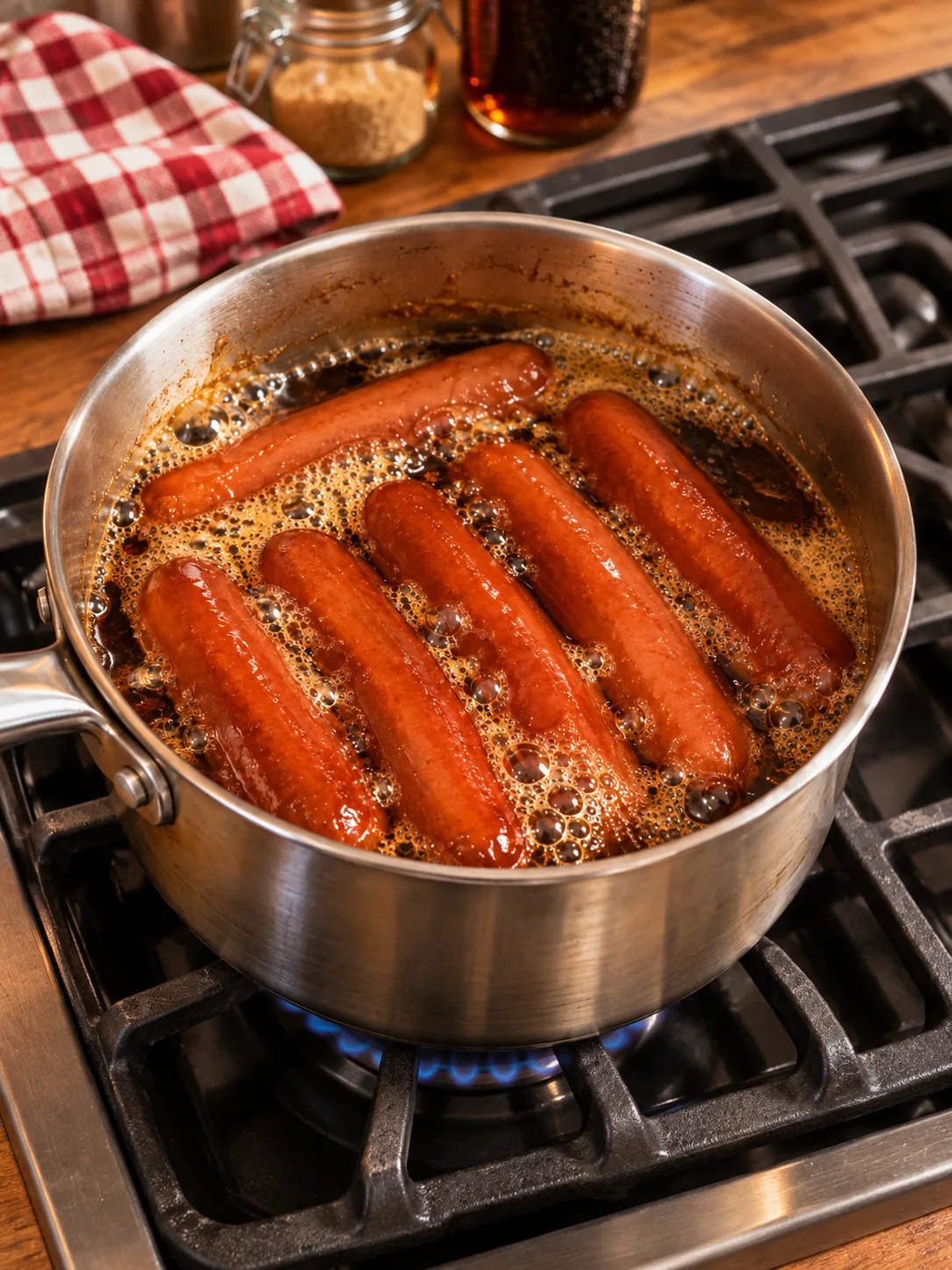
Within the first 3 to 4 minutes, I noticed more bubbling around the edges than I expected. It wasn’t the clean, steady bubbling you get with tap water. The cola formed a light tan foam on top, and the fizz made the surface look busier. Once it warmed up, the carbonation started fading, but the sugar in the soda changed the whole feel of the pot.
It also smelled sweet right away. Instead of that plain steamed-hot-dog smell, my kitchen started smelling like warm barbecue sauce mixed with soda syrup. My kids wandered in and asked what I was making, which honestly made me laugh because it definitely didn’t smell like an ordinary hot dog night.
3. At 5 minutes, the hot dogs had already darkened
By the 5-minute mark, the outsides looked slightly deeper in color. They went from their usual reddish-brown to a shinier, darker tone. It wasn’t dramatic yet, but it was noticeable, especially where the hot dogs were touching the bottom of the pan.
That early color change made sense once I thought about it. Cola contains sugar and caramel coloring, so even before much liquid reduced, the hot dogs were picking up a glossy coating. They looked a little like they’d been brushed with a thin glaze.
4. At 10 minutes, the liquid started reducing into a syrup
This was the point where the experiment got interesting. Around 8 to 10 minutes, the cola had reduced enough that it was no longer acting like a simple boiling liquid. It started thickening slightly, and the bubbles became slower, stickier, and more syrupy around the edges.
If I’d walked away, I think I could have ruined the batch. Sugary liquid reduces quickly once enough water cooks off, and I found myself turning the hot dogs every 1 to 2 minutes so they wouldn’t sit in one spot too long. The pan needed more attention than a normal pot of boiling water, that’s for sure.
5. At 15 minutes, the hot dogs were glossy, darker, and sweeter
Fifteen minutes later, the biggest visible difference was the finish. The hot dogs had a deep brown-red sheen and looked almost lacquered. The cola had reduced down substantially, leaving just a shallow layer of dark syrup in the pan instead of a full bath of liquid.
Taste-wise, the sweetness came through first. Not candy-sweet, but definitely sweeter than a plain boiled hot dog. The salty, smoky flavor was still there, but now it had a mild caramel note around it. If you enjoy sweet-and-savory combinations, it’s actually pretty tasty. If you like your hot dogs very classic and straightforward, it may feel a little unusual on the first bite.
6. The texture changed more than I expected
This was the part I found most surprising. Hot dogs boiled in water usually stay plump and soft with a pretty even texture. These, after 15 minutes in cola, were still juicy inside, but the outside had tightened just a touch. The surface felt slightly firmer, almost as if they’d been lightly pan-glazed.
That firmer outer layer wasn’t tough, but it was noticeable. My husband liked that part because he said it made them feel a little more substantial in the bun. One of my kids preferred the regular-water version because the soda-cooked one had a slightly stickier exterior. So if you’re cooking for a family, this is one of those fun little differences that people may react to in their own way.
7. The pan got sticky fast
I would be doing everyone a disservice if I skipped this part. The cleanup was definitely harder than with plain water. Once the cola reduced, the sugar clung to the sides and bottom of the saucepan. It wasn’t burnt, but it was tacky enough that I had to soak the pan in hot soapy water for about 20 minutes before washing it.
If I make these again, I’d either use a nonstick skillet or a saucepan with a heavier bottom and keep the heat a little lower once the soda starts reducing. I’d also avoid letting the syrup cook down too far. There’s a fine line between delicious glaze and a stubborn brown ring on your cookware.
8. They worked best with soft buns and simple toppings
Because the hot dogs were already sweet, I found that the best bun was a basic soft white hot dog bun, lightly warmed for about 2 minutes in a 300-degree oven. A fancy sweet brioche bun would have pushed the whole thing too far into sugary territory for me.
For toppings, yellow mustard was the winner in my kitchen because the tang balanced out the sweetness. Thinly diced onions helped too. Ketchup was fine, but with the cola glaze already there, it made the whole thing sweeter than I wanted. If you like contrast, try mustard and a little dill pickle relish. That combination really brightened things up.
9. Picky eaters may like this more than you’d think
One thing I’ve learned as a mom is that anything with a touch of sweetness often has a better chance with cautious eaters. The cola version had a familiar flavor profile that reminded my kids a little bit of barbecue sauce without all the visible sauce on top. That made it feel fun instead of intimidating.
If you have a child who doesn’t love mustard, onions, chili, or other classic toppings, this can be a simple way to make hot dogs feel more special without adding a lot of extras. I’d just keep the toppings plain and maybe serve them with oven fries or apple slices on the side.
10. It is not quite “boiling” by the end — it’s more like simmering and glazing
Technically, I started by boiling the hot dogs in cola, but by the last few minutes, the process changed. Once enough liquid evaporated, it became more of a simmer-and-glaze situation. That’s important because if someone expects the soda to behave just like water for a full 15 minutes, they may be surprised.
In my opinion, the best results would probably come from treating this as a two-stage method: 5 to 7 minutes of gentle simmering, then 3 to 5 minutes of careful turning in the reduced cola. Letting the full 15 minutes run at a hard boil would be too much in most pans and could make the sugar scorch.
11. The flavor was better with regular cola than I think diet would be
I used regular cola because I wanted the full caramelized effect from the sugar. That sugar is what creates the darker color and sticky glaze. I haven’t tested diet cola in the same way, but I suspect it would behave differently and wouldn’t reduce into the same glossy syrup.
If you’re going to try this experiment, I’d stick with a standard cola first. A 12-ounce can was enough for one package of hot dogs. If you double the hot dogs, I’d use two cans and a wider pan so everything cooks evenly instead of stacking.
12. These would be even better with a few smart additions
After tasting them plain, I immediately started thinking about little upgrades. A teaspoon of Worcestershire sauce added near the beginning would deepen the savory side. A pinch of black pepper or a quarter teaspoon of smoked paprika would help balance the sweetness too.
For an even more cookout-style flavor, I think adding 1 tablespoon of yellow mustard and 1 tablespoon of brown sugar to the cola would turn it into something very close to a quick stovetop barbecue glaze. At that point, though, you’re moving beyond the experiment and into recipe territory.
13. The best timing is probably less than 15 minutes for many brands
Here’s my honest take after trying it: 15 minutes is right on the edge. My hot dogs were still good, but if your stove runs hot or your pan is shallow, 15 minutes could be a little too long. Many packaged hot dogs are already fully cooked, so they really just need to be heated through, which usually takes 5 to 8 minutes.
For the flavor of cola without as much risk, I’d recommend 6 to 8 minutes of simmering, then 2 to 3 minutes of reducing the sauce while turning the hot dogs. That gives you the sweet glaze and darker color without as much chance of over-reduction or sticky cleanup.
14. The experiment was fun, but it won’t replace every hot dog method
I still love grilled hot dogs for summer evenings and plain simmered hot dogs when I need dinner on the table in a hurry. Cola-cooked hot dogs are not my everyday method, but they are absolutely a fun change of pace. They feel a little playful, a little nostalgic, and a little like fair food in the best possible way.
This is the kind of kitchen trick I’d pull out for game day, movie night, or a casual backyard meal where people can try something different and talk about it. It’s not fancy, and it doesn’t need to be. Sometimes dinner is just more memorable when it has a story behind it.
15. My final verdict: yes, it works — with a few cautions
So what happened 15 minutes later? The hot dogs turned darker, shinier, and sweeter, with a lightly glazed outside and a more pronounced sweet-savory flavor. The cola reduced into a sticky syrup, the pan required extra cleanup, and the whole thing ended up tasting much better than I expected.
Would I do it again? Yes, but a little differently. Next time I’d keep the heat at medium-low after the first few minutes, stop closer to the 10-minute mark, and serve them with mustard and onions to balance the sweetness. If you enjoy easy kitchen experiments and don’t mind washing a sticky saucepan, this one is worth trying at least once. In my house, it turned an ordinary package of hot dogs into a dinner everyone had an opinion about, and honestly, that’s half the fun.