You know how this happens.
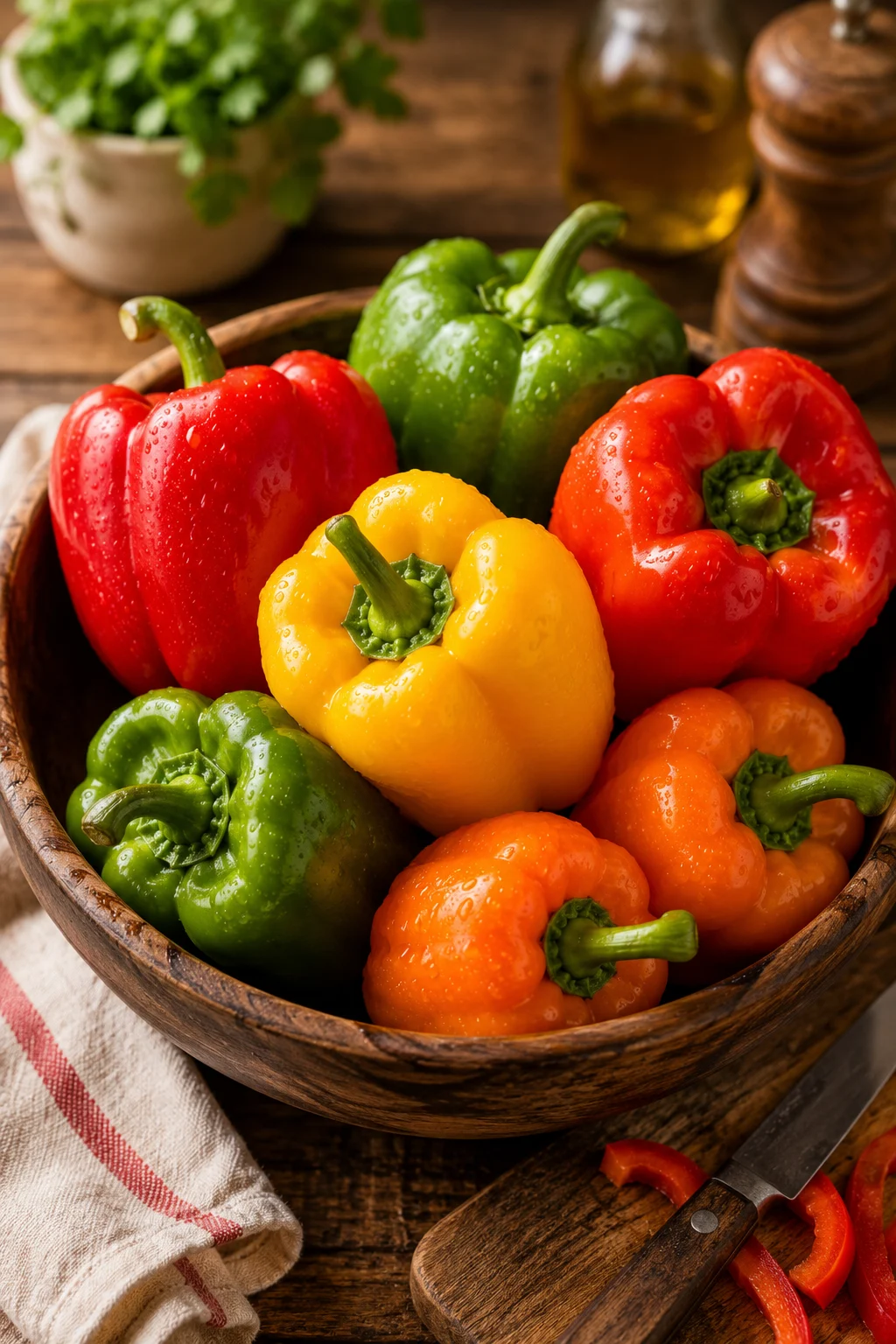
You buy one of those colorful bags of bell peppers because, at the grocery store, you suddenly become the kind of person who apparently cooks with six peppers every week.
Then Tuesday happens.
Wednesday gets busy.
By Saturday, you’ve got three red peppers, two yellow ones, and a slightly wrinkly green pepper staring at you from the crisper drawer like, “So… what’s the plan here?”
Honestly, using leftover bell peppers doesn’t have to mean making the same fajitas three nights in a row.
Bell peppers are one of my favorite vegetables to have too many of because they can go into breakfast, lunch, dinner, snacks, sauces, soups, casseroles, and freezer meals. Sweet peppers also work raw, roasted, sautéed, grilled, or stuffed.
So before those peppers get soft enough to make you feel guilty every time you open the refrigerator, put them to work.
Here are 10 easy ways to use leftover bell peppers, plus storage tips, freezing instructions, quick meal ideas, and answers to the questions that always come up when you’ve got a crisper drawer full of peppers.
How Long Do Bell Peppers Last?
Whole fresh bell peppers generally keep better than sliced ones.
Keep whole peppers refrigerated in the crisper drawer. Avoid washing them until you’re ready to use them because excess moisture can encourage deterioration.
Once you cut a pepper, refrigerate the remaining pieces promptly in a covered container or food-storage bag.
The exact storage life varies with freshness and refrigerator conditions, so don’t depend only on a calendar.
Check the pepper itself.
Firm and crisp?
Great.
A little wrinkled but otherwise normal?
Probably time to cook it.
Slimy, moldy, leaking, or smelling unpleasant?
That pepper has missed its dinner reservation.
Toss it.
1. Make a Big Batch of Sautéed Peppers and Onions
This is probably my favorite solution when several peppers need attention immediately.
Slice the peppers into strips.
Slice an onion.
Heat a little olive oil in a large skillet over medium-high heat.
Add the vegetables and season with salt and black pepper.
Cook until the peppers soften and develop some browned edges.
That’s it.
Now you’ve got a ridiculously useful refrigerator staple.
What to Do With Sautéed Peppers and Onions
Pile them onto:
- Burgers
- Sausages
- Steak sandwiches
- Chicken
- Tacos
- Quesadillas
- Rice bowls
- Omelets
- Pizza
- Baked potatoes
I especially love making a large skillet on Sunday because suddenly a boring Tuesday-night chicken breast has backup.
Warm peppers and onions on top?
Dinner looks intentional again.
Give Them More Flavor
Garlic works beautifully here.
So does oregano.
For fajita-style peppers, add cumin and chili powder.
For an Italian-style version, use garlic, oregano, basil, and crushed red pepper.
Want something slightly sweeter?
Cook the peppers and onions slowly until they’re deeply tender.
The natural sweetness becomes much more noticeable.
2. Freeze Chopped Bell Peppers for Future Meals
Got more peppers than you can reasonably eat?
Freeze them.
Bell peppers are especially convenient to freeze when you plan to use them later in cooked dishes.
The texture can become softer after thawing, so frozen peppers aren’t my first choice for a crisp raw salad.
For soups, chili, casseroles, omelets, sauces, and skillet dinners?
Perfectly handy.
How to Freeze Bell Peppers
Wash the peppers.
Dry them thoroughly.
Remove the stems, seeds, and inner membranes.
Cut them into strips or dice them.
Spread the pieces across a baking sheet in a single layer.
Freeze until firm.
Then transfer the frozen pieces into freezer-safe containers or bags.
Remove excess air and label the package with the date.
Freezing them individually first helps prevent one enormous frozen pepper brick.
Because nobody needs to attack a block of peppers with a butter knife at 6 p.m.
Do You Need to Blanch Bell Peppers Before Freezing?
Bell peppers can be frozen without blanching.
That’s one reason they’re so convenient.
Wash.
Dry.
Cut.
Freeze.
Done.
I usually freeze some diced and some sliced.
The diced peppers go into eggs, soups, and chili.
The strips are ready for fajitas and stir-fries.
Future me is always weirdly grateful.
3. Make Roasted Red Pepper Sauce
If you’ve got several red, orange, or yellow peppers, roast them.
Roasting transforms their flavor.
The peppers become softer and sweeter, with those lightly charred notes that make an ordinary sauce taste far more interesting.
How to Roast Bell Peppers
Heat your oven to around 450°F.
Cut the peppers in half.
Remove stems and seeds.
Place them cut-side down on a lined baking sheet.
Roast until the skins develop dark blistered areas and the peppers become tender.
Remove them from the oven.
Let them cool enough to handle.
You can cover them briefly while cooling if you want the skins to loosen more easily.
Peel away loose charred skin if desired.
Don’t obsess over removing every microscopic black speck.
We’re making dinner, not restoring artwork.
Easy Roasted Pepper Pasta Sauce
Blend roasted peppers with:
- Garlic
- Olive oil
- Parmesan
- Salt
- Black pepper
- A little cream, optional
- Fresh basil, optional
Blend until smooth.
Toss with warm pasta.
Add grilled chicken if you want more protein.
The sauce also works over ravioli, gnocchi, roasted vegetables, or chicken.
And suddenly those peppers that were getting suspiciously wrinkly yesterday are the best part of dinner.
4. Turn Bell Peppers Into Breakfast
Bell peppers and eggs are old friends.
Dice leftover peppers and cook them briefly in a skillet before adding eggs.
Now you’ve got the start of:
Scrambled eggs.
Omelets.
Breakfast burritos.
Breakfast tacos.
Frittatas.
Egg muffins.
Breakfast casseroles.
This is especially useful when you only have half a pepper left.
You don’t need an entire recipe devoted to it.
Just chop the thing and throw it into breakfast.
Easy Bell Pepper Egg Muffins
For a make-ahead breakfast, whisk eggs with a little milk.
Add diced bell peppers.
Mix in chopped onion, spinach, cooked bacon, ham, or shredded cheese if you like.
Season with salt and pepper.
Pour into a greased muffin pan.
Bake until the centers are set.
Cool and refrigerate promptly.
Now breakfast is basically waiting for you.
Which, on a Monday morning, feels like somebody else did you a favor.
5. Make Stuffed Bell Peppers
If your peppers are still firm and intact, stuffed peppers are an obvious choice.
And I mean “obvious” in the best possible way.
They use an entire pepper per serving, so this recipe can wipe out a large surplus quickly.
Easy Stuffed Bell Pepper Filling
For about 4 large peppers, try:
- 1 pound ground beef or turkey
- 2 cups cooked rice
- 1 small onion, diced
- 2 cloves garlic, minced
- 1 to 1 1/2 cups tomato sauce
- 1 teaspoon Italian seasoning
- Salt
- Black pepper
- 1 cup shredded cheese
Brown the meat.
Add onion and cook until softened.
Add garlic.
Stir in rice, tomato sauce, and seasonings.
Taste and adjust the seasoning.
Cut the peppers in half lengthwise or remove the tops for upright stuffed peppers.
Remove seeds and membranes.
Fill generously.
Top with cheese.
Bake until the peppers are tender and the filling reaches a safe serving temperature.
Use Whatever Leftovers You Already Have
Stuffed peppers are fantastic refrigerator-cleanout food.
Leftover taco meat?
Use it.
Cooked chicken?
Yep.
Quinoa?
Sure.
Black beans?
Absolutely.
Corn?
Throw it in.
Half a jar of salsa?
Now we’re getting somewhere.
A stuffed pepper doesn’t need to follow one rigid formula.
It needs a flavorful filling and enough time in the oven for the pepper to become tender.
6. Make Quick Refrigerator Pickled Peppers
If you like crunchy, tangy toppings, pickle your extra peppers.
Quick pickled bell peppers are great on sandwiches, tacos, burgers, grain bowls, salads, and grilled meats.
They also add color to practically everything.
Simple Quick Pickled Bell Peppers
You’ll need:
- 2 bell peppers, thinly sliced
- 1 cup vinegar
- 1 cup water
- 1 tablespoon sugar
- 2 teaspoons salt
- Garlic, optional
- Peppercorns, optional
- Mustard seeds, optional
Place the sliced peppers in a clean heat-safe jar or container.
Combine the vinegar, water, sugar, and salt.
Heat until the salt and sugar dissolve.
Pour the mixture over the peppers.
Let everything cool appropriately, cover, and refrigerate.
These are refrigerator pickles, not shelf-stable canned peppers.
Keep them cold.
Try Red Onion With the Peppers
This combination is so good.
Thinly slice red onion and bell peppers together.
Pickle them in the same brine.
The result works especially well with tacos and pulled pork sandwiches.
I can make a completely ordinary turkey sandwich, add these peppers, and suddenly I’m much more interested in lunch.
That’s a win.
7. Add Bell Peppers to Homemade Pizza
Pizza is basically an edible answer to the question, “What needs to leave my refrigerator?”
Bell peppers are perfect.
Slice them thinly.
Add them to pizza with:
- Pepperoni
- Sausage
- Mushrooms
- Onion
- Olives
- Chicken
- Bacon
- Spinach
- Jalapeños
If you prefer softer peppers, sauté them briefly before putting them on the pizza.
If you like more bite, use thin raw slices.
Make French Bread Pizza
Don’t feel like making pizza dough?
Same.
Split a loaf of French bread.
Add pizza sauce.
Sprinkle on mozzarella.
Add sliced leftover peppers and whatever other toppings need attention.
Bake until the cheese melts and the bread becomes crisp around the edges.
This is one of those dinners that feels almost embarrassingly easy.
Nobody at the table needs to know that was the point.
8. Make Bell Pepper Fajitas
Yes, fajitas are the predictable answer.
They’re predictable because they work.
When I have several peppers in different colors, this is usually where they end up.
Red, yellow, orange, and green peppers look fantastic together.
Easy Chicken and Bell Pepper Fajitas
For a family-size skillet, use:
- 1 1/2 pounds boneless chicken
- 3 bell peppers
- 1 large onion
- 2 tablespoons oil
- 2 teaspoons chili powder
- 1 teaspoon ground cumin
- 1 teaspoon smoked paprika
- 1/2 teaspoon garlic powder
- Salt
- Black pepper
- Lime wedges
- Warm tortillas
Slice the chicken into strips.
Slice the peppers and onion.
Season the chicken.
Cook it in a hot skillet until safely cooked through.
Transfer it to a plate.
Cook the peppers and onion until tender-crisp with lightly browned edges.
Return the chicken to the skillet.
Squeeze fresh lime over everything.
Serve with warm tortillas.
Don’t Overcook the Peppers
This is important.
Fajita peppers should have some life left in them.
You want tender-crisp strips with a little char.
Not colorful vegetable noodles.
Use a hot skillet.
Don’t overcrowd it.
Cook in batches if necessary.
A crowded pan traps steam, which makes browning harder.
9. Blend Them Into Soup
Bell peppers are wonderful in soup because they add natural sweetness and color.
You can use them in:
Tomato soup.
Vegetable soup.
Chicken soup.
Taco soup.
Chili.
Minestrone.
Roasted pepper soup.
If the peppers have started getting a little wrinkled but remain free from spoilage, soup is a particularly useful destination.
Texture matters much less once everything is cooked.
Roasted Bell Pepper and Tomato Soup
Roast several bell peppers with tomatoes, onion, and garlic.
Blend with broth.
Season with salt, pepper, and herbs.
Add cream if you want a richer finish.
Serve with grilled cheese.
Seriously.
Roasted pepper-tomato soup and a crispy grilled cheese sandwich on a cool night?
That’s not leftover management anymore.
That’s dinner people actually request.
10. Make Bell Pepper Nachos
Here’s a fun one.
Instead of using tortilla chips as the base, cut bell peppers into thick wedges.
Arrange them on a baking sheet.
Top with seasoned cooked meat or beans and shredded cheese.
Bake until everything is hot and the cheese melts.
Then add toppings.
Try:
Salsa.
Green onion.
Cilantro.
Diced tomato.
Avocado.
Sour cream.
Jalapeños.
They’re not going to fool anyone into thinking they’re tortilla chips.
And they don’t need to.
They’re crunchy, colorful, and really good.
Mini Bell Pepper Nachos Work Too
If you’ve got mini sweet peppers, cut them lengthwise.
Remove the seeds.
Arrange the halves cut-side up.
Top them like tiny nachos.
These make a fun party appetizer.
They’re also convenient for using small amounts of leftover taco meat.
Plus, they look ridiculously cute on a platter.
Sometimes dinner gets points for being cute.
Bonus Idea: Make Homemade Pepper Relish
Still have peppers?
Okay, your grocery shopping ambitions were impressive.
Chop bell peppers finely with onion.
Cook them with vinegar, sugar, salt, and suitable seasonings to create a quick relish for refrigerated use.
Serve it with:
Hot dogs.
Burgers.
Sausages.
Sandwiches.
Grilled chicken.
Beans.
Keep in mind that a quick refrigerator relish is different from a tested home-canning recipe.
If you want shelf-stable canned relish, follow a tested canning recipe from a reliable food-preservation authority.
Don’t improvise shelf-stable canning ratios.
Bonus Idea: Add Peppers to Chili
Chili will happily accept your extra peppers.
Dice them.
Cook them with onion before adding the remaining ingredients.
Green bell peppers bring a slightly sharper flavor.
Red peppers taste sweeter.
I like using both.
The peppers practically disappear into a long-simmered chili while adding flavor and vegetables.
This is especially handy if somebody in your house claims they “don’t like peppers.”
Apparently vegetables become invisible when surrounded by enough beef and chili powder.
Bonus Idea: Make Pepper and Cheese Quesadillas
Sauté sliced peppers until tender.
Place them between tortillas with shredded cheese.
Add cooked chicken, beans, or leftover steak if desired.
Cook the quesadilla until golden on both sides and the cheese melts.
Slice into wedges.
Serve with salsa.
This is probably the fastest way I know to turn one lonely pepper into lunch.
And if you’ve got half an onion hanging around too?
Perfect.
Your refrigerator is basically writing the recipe for you.
Bonus Idea: Add Raw Peppers to Salads
Don’t forget that fresh bell peppers are delicious raw.
Cut crisp peppers into strips or cubes and add them to:
Garden salads.
Greek salads.
Pasta salads.
Bean salads.
Chicken salads.
Grain bowls.
Chopped salads.
Red, orange, and yellow peppers add natural sweetness.
Green peppers bring a more pronounced vegetal flavor.
Use whichever you prefer.
Or use all four and make lunch look like it has its life together.
Can You Use Wrinkled Bell Peppers?
A little wrinkling doesn’t automatically mean a pepper needs to go in the trash.
Wrinkled peppers have lost some moisture.
They may no longer have the crisp texture you want for a raw veggie tray, but they can still work well in cooked recipes if they otherwise look and smell normal.
Use them in:
Soups.
Sauces.
Fajitas.
Casseroles.
Egg dishes.
Chili.
Roasted vegetable dishes.
The key is distinguishing a pepper that’s simply past peak crispness from one that’s actually spoiled.
How to Tell if a Bell Pepper Is Bad
Throw away a pepper when you notice clear signs of spoilage such as:
- Visible mold
- Slimy texture
- Leaking liquid
- Rotten areas
- Strong unpleasant odor
- Extensive soft decay
A small wrinkle?
Cook it soon.
A slippery pepper that smells weird?
Nope.
We’re done here.
Food waste is frustrating, but eating obviously spoiled produce isn’t the solution.
Can You Cut Mold Off a Bell Pepper?
I wouldn’t rely on casually trimming around questionable decay and assuming everything else is fine.
When a pepper shows extensive mold, softness, leaking, or deterioration, discard it.
If food safety is uncertain, replacement is the better choice.
Bell peppers aren’t worth turning dinner into an experiment.
Whole Bell Peppers vs. Cut Bell Peppers
Whole peppers generally maintain quality longer because the skin protects the interior.
Once you cut a pepper, moisture loss and deterioration can happen faster.
That’s why I try not to slice peppers until I need them.
If you only need half, refrigerate the remaining half promptly in a covered container.
Then put it somewhere visible.
This sounds silly.
It works.
If I hide half a pepper behind the yogurt, I will apparently forget peppers exist.
Should You Wash Bell Peppers Before Storing Them?
For longer refrigerator storage, I prefer keeping whole peppers dry and washing them immediately before use.
Moisture can encourage deterioration.
If you’ve already washed them, dry them thoroughly before refrigerating.
For meal-prepped sliced peppers, wash first, dry well, cut them with clean equipment, and refrigerate promptly in a clean covered container.
Dryness matters.
Nobody wants a tiny indoor swamp inside the produce bag.
Where Should Bell Peppers Go in the Refrigerator?
The crisper drawer is a convenient place for whole peppers.
Keep them away from obvious moisture buildup.
Don’t crush them underneath heavy produce.
Check the drawer regularly.
This is especially important if you buy vegetables in bulk.
The best storage method in the world doesn’t help much when you forget the peppers exist for three weeks.
Put “check the crisper” on the refrigerator if you have to.
No judgment.
Can Bell Peppers Be Frozen Whole?
You technically can freeze large pieces, but removing the stem, seeds, and membranes first makes the peppers much more convenient later.
I prefer slicing or dicing before freezing.
Then I can grab exactly what I need.
Half a cup for scrambled eggs?
Done.
Two cups for chili?
Easy.
A bag of strips for fajitas?
Ready.
A little prep now saves time later.
How Long Can Frozen Bell Peppers Last?
Frozen food can remain safe for a long time when continuously maintained at proper freezer temperatures, but quality gradually declines.
For the best flavor and texture, label your peppers and use older packages first.
That’s another reason dates matter.
A mystery freezer bag containing red chunks could be peppers.
Could be tomatoes.
Could be something from 2023.
Label it.
Future you deserves answers.
Do Frozen Bell Peppers Get Mushy?
They become softer than fresh peppers.
Freezing damages some of the vegetable’s cellular structure, so thawed peppers won’t usually have that fresh raw crunch.
That’s normal.
Use frozen peppers in cooked foods where softness isn’t a problem.
I often cook them directly from frozen in:
Soups.
Chili.
Sauces.
Egg dishes.
Casseroles.
Skillet meals.
Save fresh peppers for salads and dipping.
Red vs. Green Bell Peppers
Green and red bell peppers aren’t simply different colors on the grocery shelf.
Their flavor differs too.
Green peppers tend to taste more grassy and slightly bitter.
Red peppers are generally sweeter because they’ve matured further.
Yellow and orange peppers also have sweet, mild flavors.
That difference can help you decide where to use leftovers.
Green peppers?
I love them in chili, pizza, and sausage sandwiches.
Red peppers?
Roast them for sauce.
Yellow and orange?
Fantastic raw, grilled, roasted, or tossed into fajitas.
Make a Bell Pepper Freezer Bag
Here’s one of my favorite practical tricks.
Keep a freezer bag specifically for recipe-ready peppers.
Whenever you’ve got a fresh pepper that you know won’t get eaten in time, clean it, cut it, freeze the pieces, and add them to your supply.
You can even make a mixed bag containing red, green, yellow, and orange peppers.
Then when fajita night comes around, half the prep is already done.
Honestly, anything that gets dinner onto the table faster on a Wednesday earns permanent residence in my kitchen.
Best Meals for Using Lots of Bell Peppers
If you need to use several peppers at once, choose meals where peppers aren’t merely garnish.
Great choices include:
- Stuffed peppers
- Chicken fajitas
- Sausage with peppers and onions
- Roasted pepper soup
- Pepper pasta sauce
- Sheet-pan chicken and peppers
- Vegetable stir-fry
- Pepper-heavy chili
- Shakshuka-inspired dishes
- Roasted vegetable trays
Three or four peppers can disappear surprisingly fast when they’re the main vegetable.
Common Mistakes When Storing Bell Peppers
Washing Them and Leaving Them Wet
Extra moisture can speed deterioration.
Dry peppers thoroughly.
Cutting Every Pepper Immediately
Whole peppers generally maintain quality longer.
Cut only what you need unless you’re meal prepping or freezing them.
Ignoring Slightly Wrinkled Peppers
A wrinkled but otherwise sound pepper may still be great for cooking.
Use it promptly.
Waiting Until They’re Spoiled to Freeze Them
Freeze peppers while they’re still in good condition.
The freezer preserves what you put into it.
It doesn’t repair bad produce.
Expecting Thawed Peppers to Be Crunchy
Use frozen peppers for cooked recipes.
Forgetting to Label Freezer Bags
Write the contents and date.
Your freezer has enough mysteries already.
Frequently Asked Questions
What can I do with lots of leftover bell peppers?
Use extra bell peppers for fajitas, stuffed peppers, roasted pepper sauce, soups, pizza, omelets, pickled peppers, quesadillas, nachos, or sautéed peppers and onions. You can also slice or dice them and freeze them for later cooking.
Can I freeze leftover bell peppers?
Yes. Wash and dry the peppers, remove stems and seeds, cut them into strips or cubes, and freeze them in suitable freezer containers or bags.
Do bell peppers need to be blanched before freezing?
Bell peppers can generally be frozen without blanching, making them one of the easier vegetables to prepare for the freezer.
Can I cook with wrinkled bell peppers?
A slightly wrinkled pepper can still work well in cooked dishes if it shows no signs of spoilage. Roast, sauté, or add it to soup, chili, eggs, or sauce.
How do you know when bell peppers have gone bad?
Mold, slime, leaking, extensive soft decay, and unpleasant odors are good reasons to discard a pepper.
What can I make with red bell peppers?
Roasted red pepper sauce, soup, pasta, fajitas, pizza, stuffed peppers, salads, and sandwiches are all great choices.
What can I make with green bell peppers?
Green peppers work especially well in chili, sausage and pepper sandwiches, pizza, fajitas, stuffed peppers, omelets, and stir-fries.
Can you freeze cooked bell peppers?
Yes. Cool cooked peppers appropriately, transfer them to suitable freezer containers, and freeze them. Their texture will be softer after thawing.
Should bell peppers be refrigerated?
Fresh bell peppers are best kept refrigerated for longer storage.
Can I freeze bell peppers for fajitas?
Absolutely. Cut them into strips before freezing so they’re ready to go directly into a skillet later.
Are soft bell peppers still good?
Slight loss of firmness doesn’t automatically mean spoilage. However, peppers that are slimy, leaking, moldy, rotten, or unpleasant-smelling should be discarded.
What’s the fastest way to use several bell peppers?
Fajitas, stuffed peppers, roasted pepper soup, sausage with peppers and onions, or a large tray of roasted vegetables can use several peppers in one meal.
Final Thoughts
Having too many bell peppers is honestly one of the better refrigerator problems.
You’ve got options.
Lots of them.
Make a skillet of peppers and onions tonight.
Roast red peppers into a creamy pasta sauce tomorrow.
Stuff four big peppers for dinner.
Quick-pickle another couple.
Chop and freeze whatever you still can’t use.
And suddenly that giant bag of peppers doesn’t look like an impulse purchase anymore.
The biggest trick with using leftover bell peppers is catching them before they actually spoil.
A pepper that’s lost a little crispness can still make a fantastic soup, sauce, fajita filling, casserole, or breakfast.
A pepper that’s moldy and slimy belongs in the trash.
So next time the crisper drawer gives you that familiar “you bought too much produce again” situation, don’t panic.
Get a cutting board.
Grab a skillet.
And if all else fails?
Freeze those peppers.
Tuesday-night fajitas will thank you.